
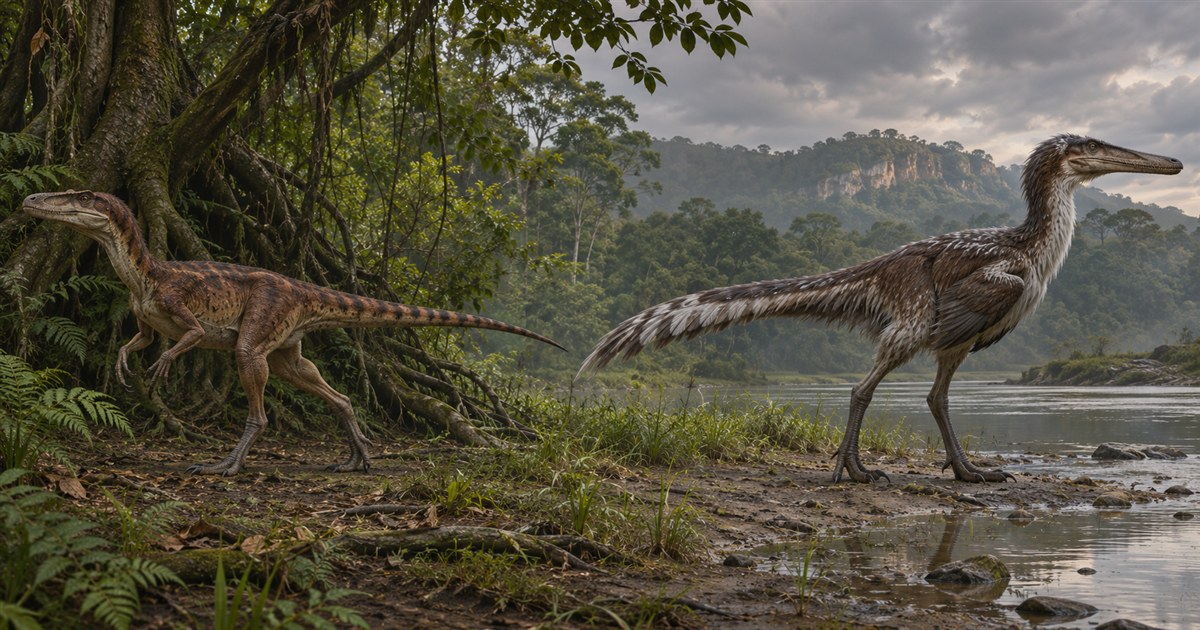
Choose Herrerasaurus if you want to spend more of the session learning the trees. Choose Austroraptor if you want a carnivore whose routine can include fishing and short swims. The choice matters most when you are travelling, feeding or looking for a way out. Those are the decisions you will make far more often than fighting the other species.
The cover is an AI-generated conceptual illustration. It depicts the two playstyles and is separate from the game’s models and environments.
The differences at a glance
| Decision | Herrerasaurus | Austroraptor |
|---|---|---|
| Where to start | Near a climbable surface with a visible landing and a route back. | Near a bank where you can enter, fish if the conditions allow, and leave. |
| What to practise | A short climb, the aim for your next jump and a deliberate return to the ground. | Entering the fishing stance, using a water jump and returning to shore. |
| When to leave | When the ground below becomes crowded or your safest return is getting cut off. | When the bank becomes busy, the fish move away or the exit is awkward. |
| What to observe | The space around your landing and the next surface you could reach. | Daylight, the shape of the bank and nearby animals while your attention is on the water. |
The developers describe Herrerasaurus’s early climbing and ambush mechanics. The 0.21.772 public branch notes list Austroraptor’s pounce, jump from surface swimming and daytime spearfishing. Check the controls and prompts in your own session when practising.
A typical Herrerasaurus session
Start in woodland where you can see both a potential perch and a clear patch of ground. Try climbing a short distance, looking around and coming back down. You learn more about that patch of terrain by returning to the same place twice than by climbing high and hoping to find a landing later.
When deciding whether to drop toward something, plan for it to move while you are in the air. Watch where it is walking, then look a little past it. That gives you time to notice whether you would land beside water, in tight vegetation or out of reach of a tested trunk. If you cannot see a way back, keep observing or move to a different tree.
Put one ordinary resource trip into the session too. Leaving cover to check for food or water will tell you whether your tree route is worth returning to. If you like revisiting the same area and learning individual trees, you’ll probably enjoy the Herrerasaurus climbing guide.
A typical Austroraptor session
Pick a short stretch of bank with a clear exit and start by travelling it on land. Look for a second place you could leave the water if someone approaches the first. In daylight, check the game’s fishing prompt, give the spot a short attempt and look up regularly to see what has changed on shore.
A water jump gives you another movement option after entering the water. The useful practice is the whole sequence: choose a landing, make the jump and return to ground where you can travel. A sloping edge and a sharp bank may look equally close on the map and feel very different when you reach them.
If the fish move away or daylight runs out, check your current food needs and pick a new objective from land. Players who enjoy alternating between shoreline travel and short attempts at fishing can follow the Austroraptor guide for the individual controls.
The same river, two decisions
Imagine both animals approaching the same bend from the woods. As Herrera, you might look for a tree that lets you watch the ground leading to the bank. As Austro, you might start by walking along the bank to find an easy return to land. If another animal arrives, the Herrera can reconsider the landing, while the Austro can give up that bank and take the exit it already checked.
Try this once on each animal during normal play. Compare how quickly you spot an exit and how comfortable you feel changing plans. The Gateway river crossing guide has more ways to assess both banks when the next leg requires crossing.
Which one should you grow?
Go with Herrera if choosing a perch and planning a jump sounds fun even when there are no other players around. Go with Austro if you want to practise fishing, learn a few banks and change between land and water as opportunities come up. Either way, pick one short loop for the first session so you can learn the return journey before you need it.