
A coastline gives you a useful edge to follow, but it can also tempt you into a long walk without a plan for drinking water, food or the climb inland. Before following the next headland, work out which beach you are on and where you intend to leave it.
Update your position, identify the nearest coastal region name, select a mapped drinking-water reference and choose an inland checkpoint. Follow the shore only while it still helps you reach that plan.
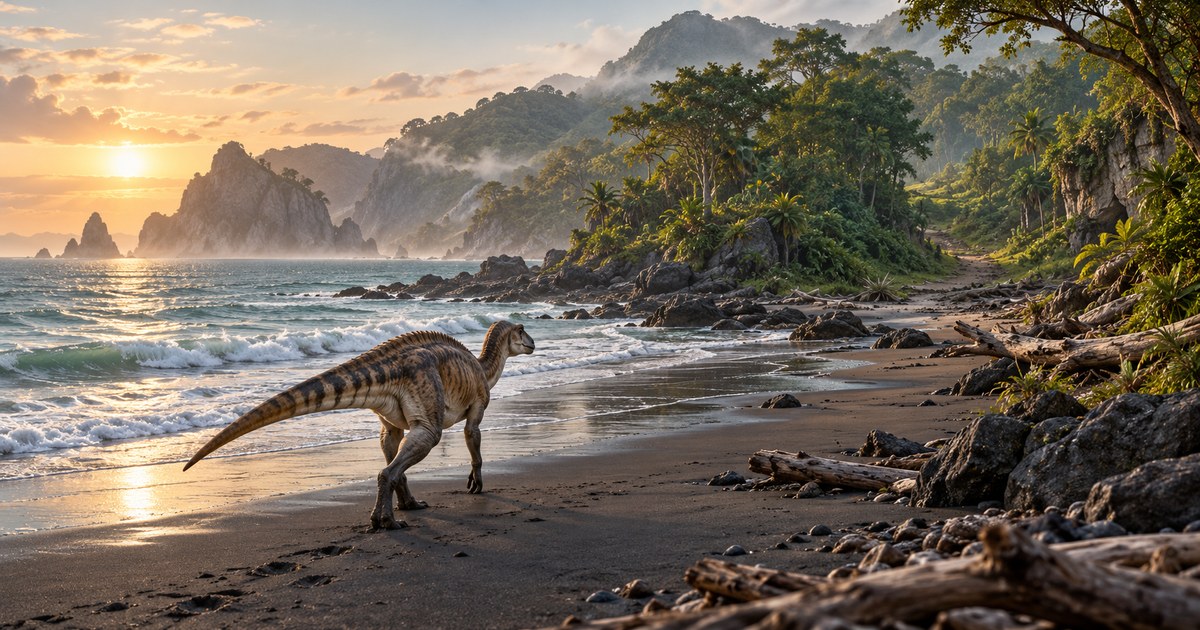
The cover is an AI-generated coastal illustration. It is not a gameplay screenshot or a verified route through a specific Gateway beach.
Identify the beach before choosing a direction
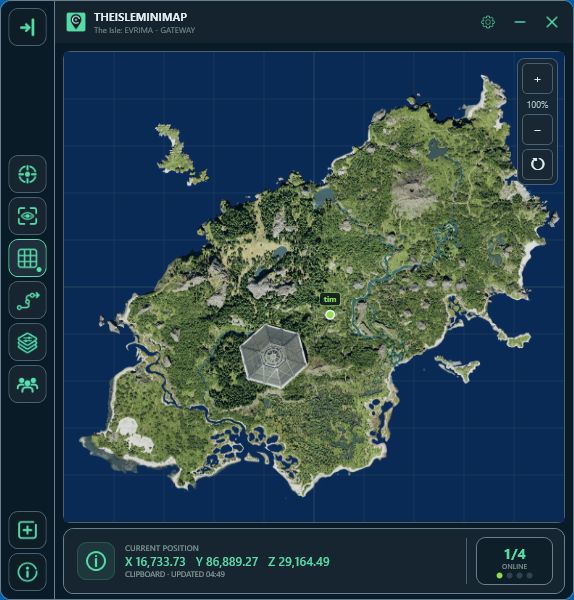
Open the in-game panel containing Asset Location and capture a fresh position. In TheIsleMinimap, enable Location names under Settings > Map Layers > General. Compare the marker with the nearest named region and the visible shape of the shoreline.
The current location layer includes Northern Beach, East Coast, Sandbank Bay, Southern Beach and Rail Beach. Those names describe different references. “I'm on the beach” is not enough to establish that you and a friend are approaching the same bay.
| What you know | Useful next check |
|---|---|
| Your marker is near a coastal label | Compare the shape of the bay or headland with the game view. |
| You can see an inland opening | Check whether it leads toward your selected destination. |
| A friend names a different beach | Zoom out and agree on one meeting reference before moving. |
| You returned after a chase or respawn | Refresh the marker before continuing the old route. |
Use two references together: your current coordinates and something recognizable ahead. Keeping the sea on one side tells you about the next part of a walk; it does not, by itself, establish your position on the whole island.
A nearby ocean is not a complete drinking-water plan
A blue area on the map does not confirm that your current dinosaur can drink at the edge you are standing on. Select a reference from Drinking water and inspect the approach in-game. Check for the drinking interaction rather than using appearance alone to judge the water.
Do this while you still have enough thirst and stamina to change the route. Waiting until your only plan is “there must be a pond around the next corner” makes each blocked approach more expensive. Before a longer stretch of shore, decide whether your next stop should be water, food or a recognizable inland junction.
Species, selected traits and server settings can affect what applies to your animal. Do not build a normal freshwater journey around a special saltwater capability you have not confirmed. The mutations guide is separate from this navigation plan.
For an ordinary water stop, choose an exit as well as an entry. A shoreline can be open to activity from both land and water. The water guide explains the drinking checks, and the river-crossing guide covers assessing a crossing rather than assuming you must swim.
Pick an exit before committing to a long beach walk
Zoom out until your marker, intended water stop and next inland reference are visible together. Add Roads & trails and Landmarks if they help connect the picture. Then choose a short first leg you can compare with the terrain in front of you.
- Name the destination. Choose a region or landmark rather than only “away from the sea.”
- Find an approach. Look for ground you can assess from your current route; do not assume a hillside is climbable because the map looks flat.
- Inspect before descending. Check the far side of a slope or crossing before losing the option to retreat.
- Refresh after a detour. Recalculate the next leg from your new position, not the place you originally left.
This is a route-planning routine, not one fixed beach-to-forest path for every playable. A journey that suits a small land animal can be a poor choice for an animal with different movement, stamina or water needs.
Search an area for a reason, not just because you can keep walking
Before looking for food along the shore, check what your animal currently needs. A long beach does not guarantee an edible item, the right nutrient or an available animal at the moment you arrive. Use relevant resource filters to narrow a search, then look and listen in-game.
Keep a limit on the detour: if your intended food search takes you away from the water approach you planned, reassess both needs together. Avoid extending the same search just because you have already travelled some distance. The food and diet guide and AI search guide explain the resource side without turning a reference marker into a live-spawn promise.
Three reasons to stop following the shoreline
- The next obstacle removes your exit. Do not turn an avoidable detour into an unfamiliar swim or drop just to keep the sea beside you.
- Your resource margin is shrinking. A water stop you can reach now matters more than an uncertain objective farther along the beach.
- The view no longer matches your plan. Refresh your coordinates and identify the last known reference before adding another stretch.
Turning inland or returning to a known junction is a change of route, not a failed journey. Make the decision while the alternative is still available.
Agree on a meeting point instead of chasing coast markers
Use the named coastal area plus a specific nearby reference and say which approach you mean. Decide who waits. With Squad access, choose one shared destination and refresh positions before either player sets off again. The game's grouping and the app's squad are separate systems; see the grouping guide if you need help with that distinction.
For map references, use the app's supported Gateway layers or VulnonaMAP. Recheck older coastal advice against official updates when the terrain changes.
Coastal survival questions
Should I follow the sea until I find something useful?
Only while that direction still supports a plan for your next water, food or inland stop.
Does a water marker prove I can drink at my exact position?
No. Inspect the location and confirm the interaction in-game.
Can friends find me from a beach name alone?
A region name helps, but a fresh position and an agreed nearby checkpoint make the meeting much clearer.