
Choose Carnotaurus if you enjoy planning a fast approach and resetting after an attack. Choose Ceratosaurus if you prefer scavenging decisions and close-range bacterial pressure. That is a playstyle recommendation, not a promise that one wins every fight. Growth, condition, terrain and the players involved can change a matchup completely.
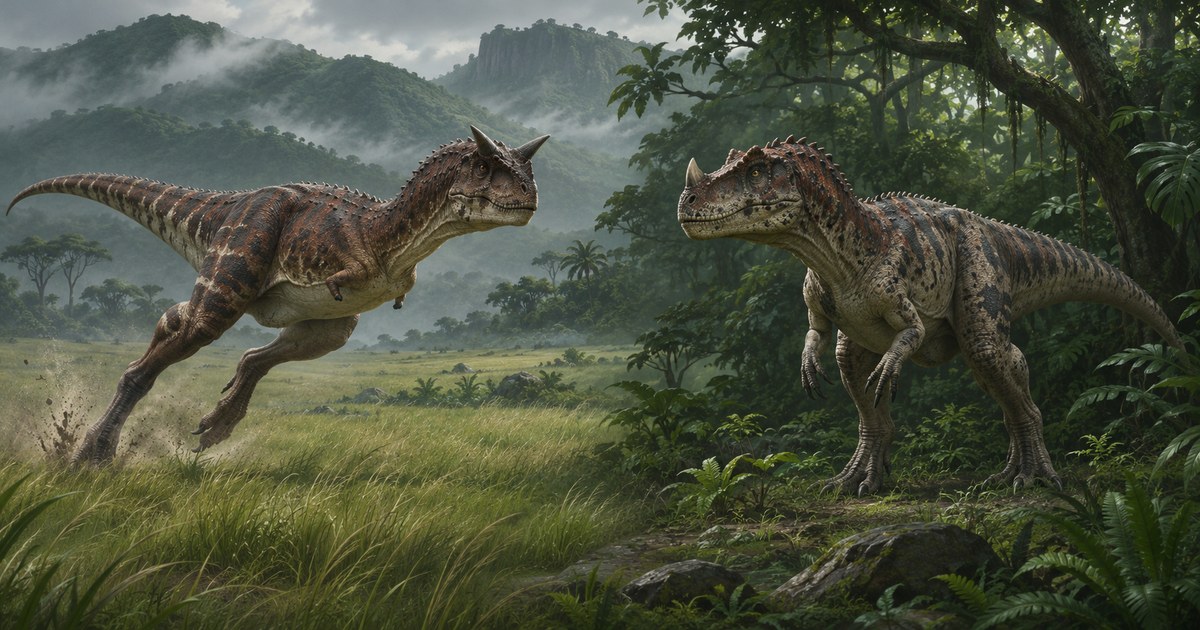
This comparison is for EVRIMA. It helps you choose a dinosaur for your next life rather than repeating a full controls guide for each. The cover is an AI-generated conceptual illustration; the two animals are not exact game models or a scale comparison.
Carnotaurus and Ceratosaurus: the useful differences
| Decision | Carnotaurus | Ceratosaurus |
|---|---|---|
| Movement style | Fast approaches with room to commit and reset. | More deliberate approaches; avoid planning around outrunning everything. |
| Attack to learn | The prepared headbutt, plus ordinary bites. | The charged bite and how bacterial pressure works. |
| Food identity | Hunting and suitable scavenging; check its own preferred foods. | A broad scavenging role that includes decayed food. |
| Same-species food | Do not assume natural cannibalism; check mutations. | A natural cannibalism exception. |
| Useful first habit | Plan where a missed attack will leave you. | Assess food, bacteria and nearby competition before committing. |
The fan-maintained Carno reference and Cera reference describe those broad roles. Their numerical tables vary with life stage, and the site flags ongoing updates. A single speed or weight number without its stage is a poor basis for choosing between the two.
Pick Carnotaurus if you like approaches, timing and resets
A good Carno approach includes somewhere to go after contact. Open ground can make that easier to judge; a target beside a tree, steep bank or narrow gap can make the same attack much less attractive. Speed helps you reach an opportunity, but it does not decide whether the opportunity is good.
Its attack advice has changed over time. The official patch 0.21.321 announcement describes holding RMB and then pressing LMB while RMB remains held for the headbutt. It can be prepared while standing or running; preparation and relative size affect the result. Your current bindings take precedence.
That matters if you learned from an old charge video. Merely colliding while sprinting is not the complete newer input. Practise an ordinary bite and a prepared attack separately before combining them with an approach. Our Carnotaurus guide covers the controls and recovery decisions in more detail.
Try Carno if you enjoy noticing an opening, taking one deliberate attempt and deciding whether to reset. If missing makes you immediately chase through every obstacle, its movement advantage can encourage exactly the wrong habit. End an unsuccessful attempt before it consumes the resources you needed to leave.
Pick Ceratosaurus if food and pressure interest you
Cera's scavenging role creates decisions around a meal before combat even starts. Is the body worth approaching? Is someone defending it? Can you feed and leave, or would staying there create a fight you do not need? A broad food range gives options, not ownership of every carcass.
The charged bite is another decision to learn. Official patch 0.20.109 notes describe changes to its charge preparation and the stamina cost of continuing the mouth display after full charge. Holding it indefinitely is not a free way to stay ready.
Bacterial pressure also depends on more than landing any bite. Watch your resources and the opponent's response instead of assuming one hit always causes vomiting. An enemy becoming sick does not make the next approach harmless. You still need to avoid their attacks.
Try Cera if you enjoy assessing food and managing a confrontation at closer range. If you dislike being drawn into contested bodies, remember you can leave one behind. Playing a scavenger does not oblige you to defend every scrap. The Ceratosaurus guide expands on bacteria and feeding without treating them as guaranteed wins.
Which is easier to feed?
Cera's broader scavenging identity is a reason to consider it, but available food on your actual server matters more than an abstract ranking. A familiar food routine may make either animal easier for you than a theoretically better diet in a region you do not know.
Do not transfer one species' food assumptions to the other. In particular, Cera is a natural cannibal, while Carno should not be treated as one without checking its active mutation and diet. The separate cannibalism guide explains that difference.
Before leaving food, inspect thirst and nutrients. A successful meal does not solve a water shortage. Choose the next trip around what you need now, rather than extending a hunt because the first part went well.
Which is better for a beginner or a solo player?
Both can be played solo. Our recommendation is to choose the mistake you want to practise correcting. Carno makes approach lines and overcommitting easy to notice. Cera asks you to separate food opportunities, bacterial preparation and the temptation to stay in a confrontation.
If you want a session built around movement and short attempts, start with Carno. If you want to learn scavenging and accept a more deliberate escape plan, try Cera. Neither choice removes the need to learn the surrounding terrain, preserve stamina and avoid mismatched fights as a juvenile.
With friends, agree on the species and check the server's rules before spawning. Do not assume playing mixed carnivores is permitted everywhere. An app squad is a way to share positions; it does not change the game's group limits or a community server's restrictions.
Does Carnotaurus beat Ceratosaurus?
There is no useful always-wins answer. Compare growth and condition before comparing names. A well-fed larger animal, a wounded smaller one and a player with almost no stamina are not equivalent tests of the species.
Terrain changes the encounter too. A clean approach with space beyond the target is different from repeated close turns beside a body. Extra players, surprise and a blocked retreat can outweigh the advantage you expected from a guide.
When reviewing a loss, ask one specific question: did you choose a bad approach, spend too much stamina, misread the attack preparation or stay after the opportunity ended? That produces a useful adjustment. Declaring the other species unbeatable does not.
Plan a short Gateway session before judging the dinosaur
Give either animal a fair test: locate a recognisable area, learn a nearby food-and-water routine, and leave yourself an exit from busy spots. The Highlands guide and stamina guide can help with those separate decisions.
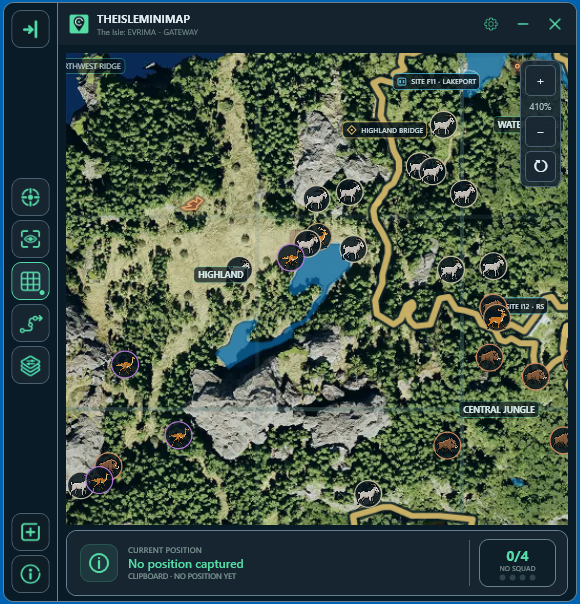
If you use TheIsleMinimap, show the map layers relevant to that trip rather than every available marker. Update your position by copying Asset Location or using your configured screen reader while the coordinates are visible. It cannot track an opponent or decide whether a carcass is safe.
After a few sessions, compare what you enjoyed rather than just how long you survived. A dinosaur that makes you want to practise its decisions is a better next choice than one selected solely from a matchup claim.