
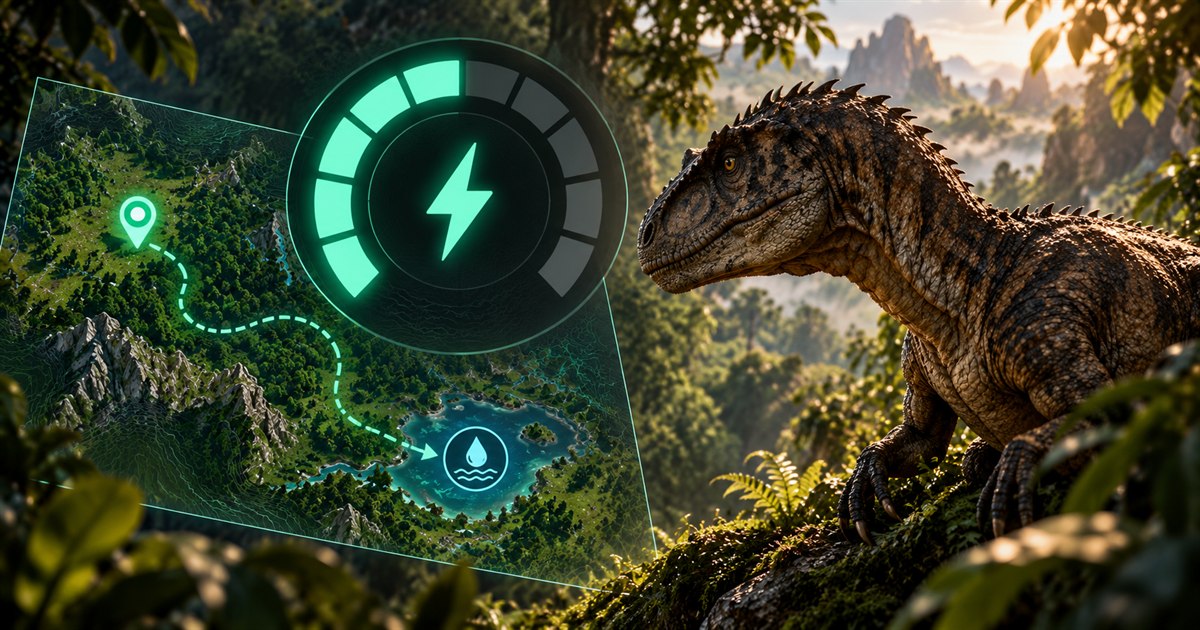
Running out of stamina in The Isle EVRIMA while trying to reach food, water or a friend? A useful stamina plan starts before the bar becomes empty. Choose a journey you can understand, avoid spending energy on unnecessary movement, and keep enough flexibility to change direction when the game situation changes.
Stop treating sprint as your default travel speed. Check the in-game stamina bar, use your dinosaur's available movement and rest controls, and observe recovery before starting the next leg. Refresh Asset Location, compare terrain and resource references, and agree on regroup points if you play with friends. TheIsleMinimap helps with navigation; it does not read your stamina, increase regeneration or guarantee a safe route.
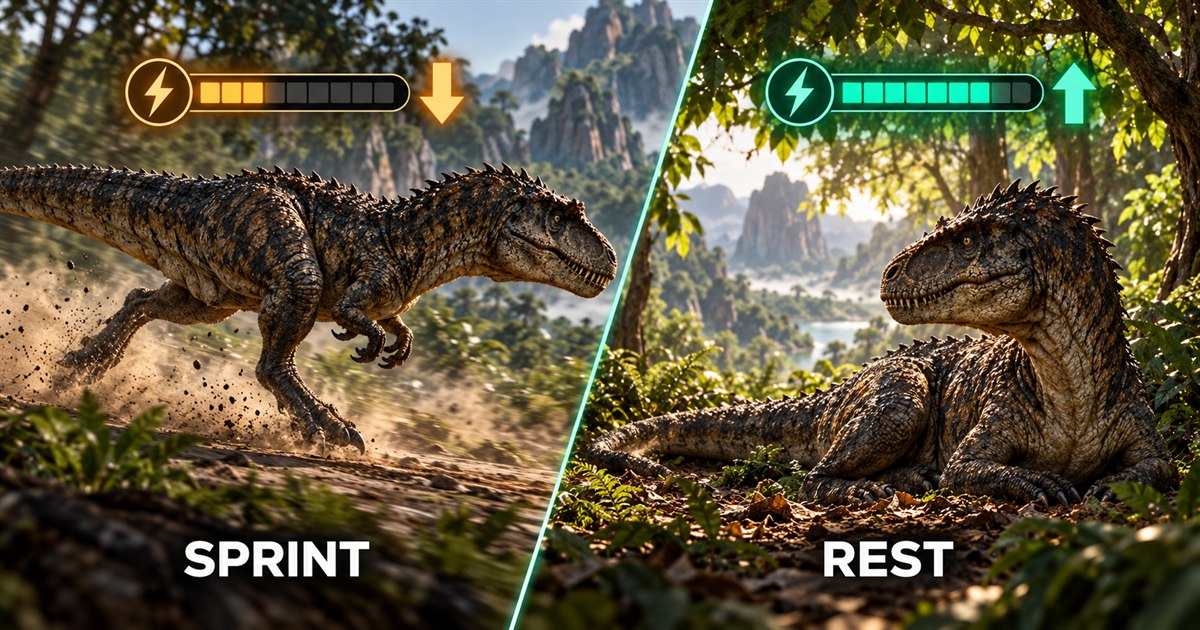
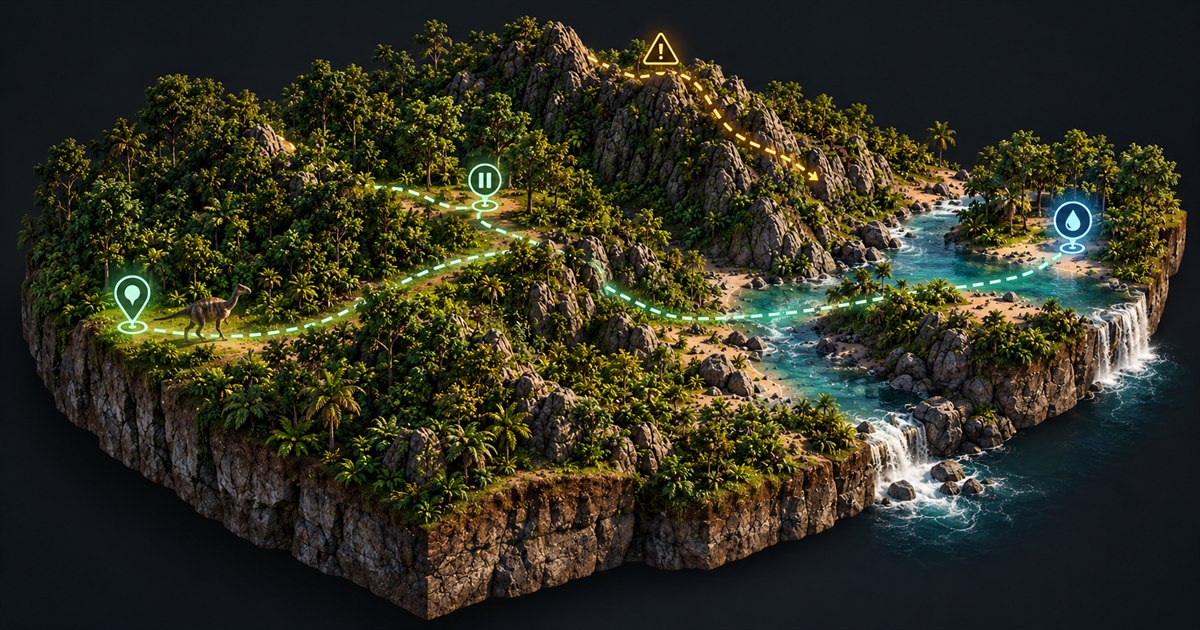
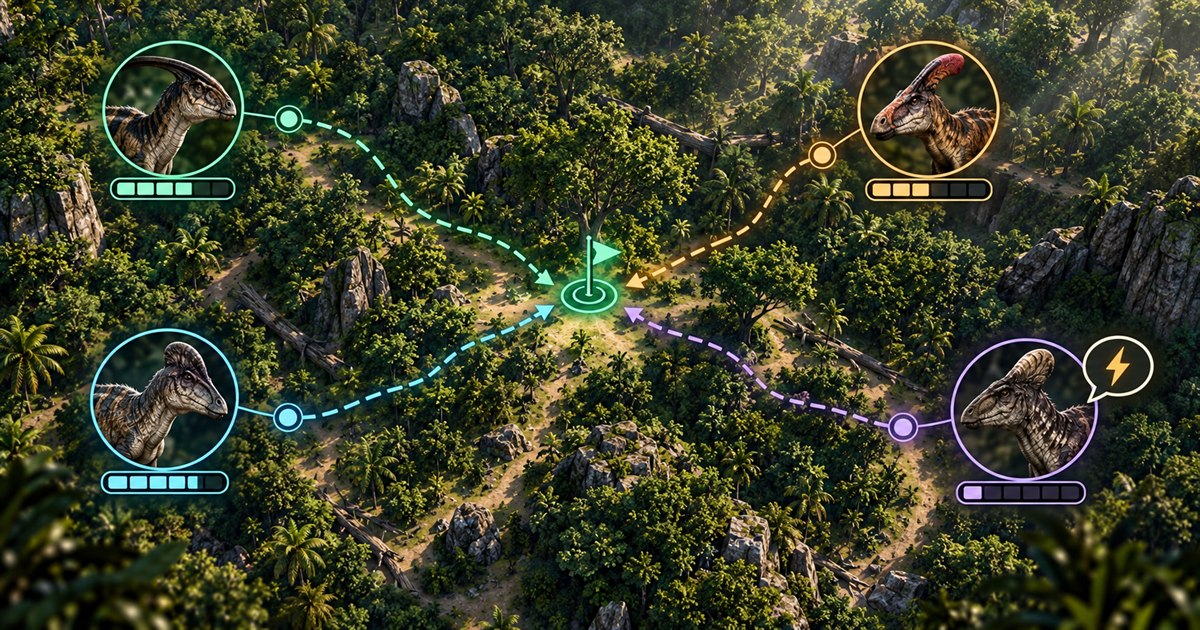
The four images are AI-generated illustrations. Energy gauges, routes and squad symbols explain planning concepts; they are not gameplay or app screenshots, exact Gateway locations or measured stamina values.
Why stamina matters in The Isle EVRIMA
Think of stamina as a resource you may need after the journey, not just something to spend until you arrive. Reaching a destination with little energy leaves fewer options if the shoreline is occupied, the food search takes longer than expected or a friend needs to change the meeting point.
Do not copy another dinosaur's travel rhythm without checking your own. Your species, growth stage, condition and current game build are reasons to judge the bar you actually have, rather than assuming that one universal sprint-and-rest schedule fits every player. A familiar journey can also become less practical after a chase or an injury.
Official balance changes have included stamina regeneration and species-specific values. For example, the January 2024 stamina patch changed movement-state recovery and regeneration values. That historical note is not a current formula: use The Isle's official announcements to check later changes before relying on an older species guide.
How to regain stamina in The Isle
When you need to recover, first stop the unnecessary activity that is spending energy. If the surroundings allow it, use the rest action assigned in your game controls and watch the stamina bar. Check your bindings if you are unsure which key enters or leaves the resting state; a control from an old guide may not match your setup.
Observe the result rather than guessing a recovery time. Confirm that your dinosaur is actually in the intended state, give yourself an opportunity to see the bar change, and reassess before moving. Repeatedly interrupting the attempt to chase a distant sound or adjust your position can turn a planned pause into another round of travel.
This guide deliberately does not promise a fixed number of seconds to refill stamina, a universal recovery percentage or a particular diet that instantly restores it. Check your dinosaur's current information in the game. If recovery looks different from a video, compare the species, growth stage, game branch and build before deciding that something is broken.
Resting also requires a decision about the surroundings. Look and listen before committing to a pause, keep a recognizable way onward in mind, and continue checking what is happening around you. A quiet-looking patch of foliage is not proof that no other player is nearby.
When should you stop sprinting on Gateway?
Before holding sprint for another long stretch, ask what that burst is achieving. Are you responding to a situation you can see, crossing a short exposed stretch, or simply trying to reach a marker whose route you have not checked? Spending energy because you feel lost rarely solves the navigation problem.
For ordinary travel, reassess the terrain and your bar before committing to the next segment. You do not have to use the same speed throughout a journey. A recognizable path with time to observe can be more useful than a fast-looking shortcut that ends at a cliff, an awkward bank or an unexpected crossing.
Avoid treating a particular amount of remaining stamina as a universal safety threshold. What you need next depends on the actual encounter, dinosaur and terrain. Keeping a reserve is a planning principle, not a guarantee that you can outrun or defeat something.
If you are searching for food, decide in advance when you will leave an empty area. A long pursuit or repeated loops around a reference point can consume the energy you meant to save for the next destination. The EVRIMA AI spawns guide explains focused searches and why animal markers are not live prey tracking.
Plan a Gateway route before spending your stamina
Use the map to reduce uncertainty, not to replace looking at the game. The nearest icon in a straight line is not automatically the shortest practical journey. A ridge, river or unfamiliar descent can change the route you can actually use.
- Refresh your position. Use current Asset Location coordinates, especially after a detour, chase or respawn. An earlier marker can send you toward the wrong starting point.
- Choose one useful destination. Decide whether the immediate priority is water, an appropriate food search or a meeting point. Avoid repeatedly switching between distant objectives.
- Compare terrain and landmarks. Look for a journey you can recognize in the game rather than drawing a straight line across every obstacle.
- Break the journey into stages. Identify a landmark at which to check direction, condition and energy before committing further.
- Keep a fallback. Consider another achievable resource reference or a way to turn back if the first approach is unsuitable.
In TheIsleMinimap, start with navigation layers that help the current journey, such as Location Names or Landmarks. Add Drinking Water or relevant food references when needed. Keeping unrelated filters hidden can make it easier to compare your current marker with the next destination.
Check the visible terrain along your chosen route. See the map layers guide for references and the coordinates guide for position setup.
Combine food and water journeys without overcommitting
Planning resources together can prevent repeated trips in opposite directions. Compare an appropriate food-search reference with nearby drinking-water references, then decide whether both fit the journey your dinosaur can currently attempt.
Do not turn that idea into a rule that every trip must collect everything. If thirst is urgent, a long food detour can be a poor choice. If a search area is empty, reaching its animal icon has not completed the job. Leave time and energy to reassess instead of repeatedly sprinting between points without checking conditions.
Water references do not report whether a bank is occupied or an interaction is available at your exact position. Food references do not guarantee an animal or plant is present. Read the Gateway drinking-water guide and EVRIMA food and diet guide for those separate decisions.
If the game becomes dark during the journey, give yourself another opportunity to check the route rather than sprinting through terrain you can no longer judge clearly. The night vision and navigation guide covers visibility checks without claiming that the minimap reveals hidden players.
Coordinate stamina and rest stops with friends
A group can waste energy when every player keeps changing direction toward someone else's old position. Agree on a meeting point, refresh shared locations and communicate when you need to stop. Plan around the member who cannot comfortably maintain the current pace rather than assuming everyone has the same reserve.
TheIsleMinimap private squads support up to four players. Participating members share their positions, and a shared pin can communicate a destination or regroup point. The app does not share their stamina bars, detect their condition or automatically choose a suitable rest stop. Tell your friends what you need in your usual communication channel.
Try agreeing on one next landmark rather than an entire island-length route. When everyone reaches it, check direction and condition together before selecting the next stage. If someone is separated, use the same meeting point instead of having the whole squad repeatedly chase each other's changing markers.
Use the online map and multiplayer squads guide for the sharing workflow. Position updates are navigation information, not a report of every player or animal on the server.
What if stamina recovery seems wrong?
Start with observable checks. Confirm the rest binding, the state your dinosaur is in and whether the bar changes when you stop the relevant activity. Compare your own conditions with the advice you are following instead of assuming a clip from another build applies unchanged.
If the behaviour remains unusual, note the game version, branch, species, growth stage, server and what you were doing before it happened. A short recording of the bar and controls is more useful for a bug report than a claim that the minimap must be causing it. Check official announcements and the server's information before changing unrelated settings.
Do not delete game saves or configuration folders as a first response to a stamina question. This article is a navigation and resource-management guide, not a diagnosis of every game bug. The minimap cannot alter the game's recovery rules or repair a server-side stamina problem.
The Isle EVRIMA stamina FAQ
How do I regain stamina in The Isle EVRIMA?
Stop unnecessary stamina-spending activity, use your dinosaur's available rest control when appropriate, and check the in-game bar before resuming the journey. Confirm your bindings and current game conditions rather than relying on a universal refill timer.
Should I sprint everywhere on Gateway?
No. Make sprinting a decision based on the terrain and situation, not your automatic travel mode. Plan a recognizable route and avoid spending your remaining energy simply because you are unsure where to go.
Does TheIsleMinimap make stamina regenerate faster?
No. It is a navigation companion. It does not change stamina, movement speed, recovery rules or other game mechanics, and it does not read the stamina bar.
Can the minimap show a safe place to rest?
No location is guaranteed safe by a map marker. Use landmarks to communicate and plan, but inspect the actual surroundings and keep in mind that other players may be nearby.
Does the squad map show my friends' stamina?
No. It shows participating members' shared positions. Communicate energy and rest needs directly, then agree on a meeting point and a pace that works for the group.
Combine your current position, navigation layers, resource references and shared squad pins in TheIsleMinimap for Windows.