
Choose Deinosuchus if you enjoy patient observation, hunting and deliberate water travel. Choose Beipiaosaurus if you want to practise repeated dives, riverbed movement and foraging trips between the surface and shore. Both make the water a major part of the session, but they give you different reasons to stop, surface and change direction.
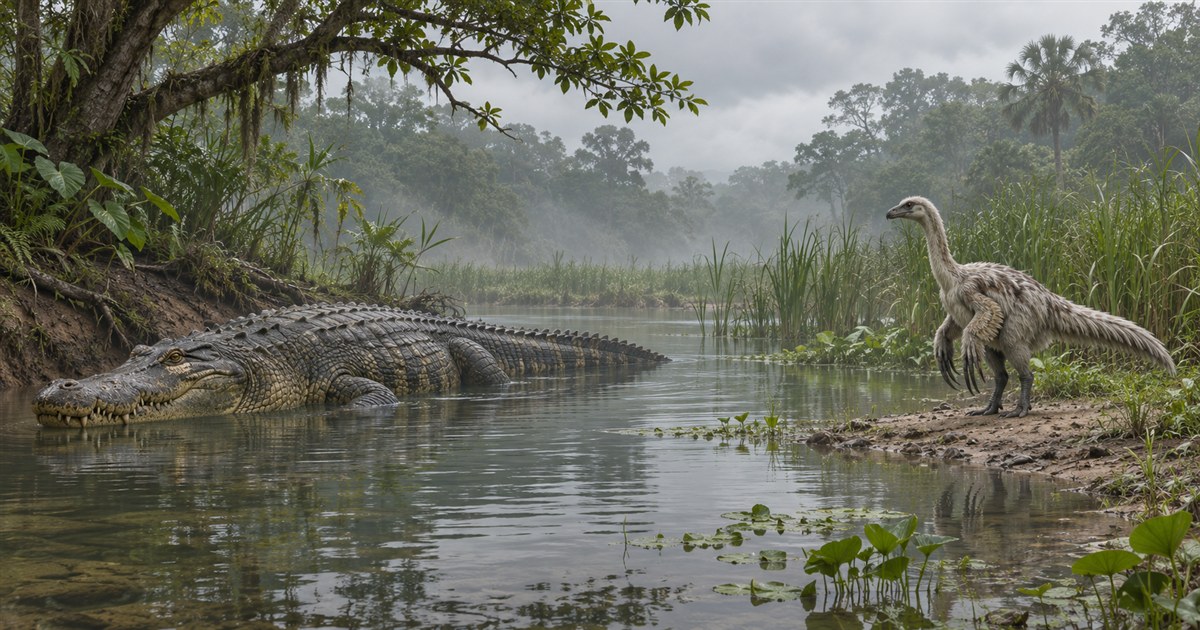
The cover is an AI-generated conceptual illustration of the two animals beside a freshwater river.
Compare an ordinary session
| Decision | Deinosuchus | Beipiaosaurus |
|---|---|---|
| First practice | Turn, change depth and return to the same visible bank. | Descend, try the riverbed movement and return to air. |
| Food trip | Learn a manageable fishing routine and observe potential hunting opportunities. | Explore food opportunities around the bed and bank while keeping a clear return to the surface. |
| Movement to learn | Distinguish an ordinary swim from a boost or riverbed lunge. | Practise releasing a riverbed latch and surfacing before extending a dive. |
| Before leaving cover | Check the approach, resources and the water you can return to. | Check the bank, surface route and next place you can leave the water. |
The official Deinosuchus release announcement provides the background for its swimming, waterwalking and lunge controls. The developers’ Beipiaosaurus movement explanation describes riverbed movement and breaching. These are historical design references. Check the current game controls and character information when you practise.
Try a Deinosuchus session with a clear objective
Start by learning one stretch of water in both directions. Notice where you can surface and where the bank changes shape. Make a short swim, check oxygen and stamina, then return before extending the route. This establishes how much room you have to turn and recover without adding a hunt to the same exercise.
Next, practise the difference between moving through the water and the action you use from the bed. Check your character’s state before pressing the lunge input. If the result differs from what you expected, repeat it somewhere familiar and watch how much movement and stamina it uses.
Learn to feed before planning a session around catching another player. Investigate fish you can see, use the current catch or bite action and follow the pickup and eating prompts. After a successful attempt, check the food panel and decide what the next need actually is. The Deinosuchus guide covers fishing, water sense and lunge practice in more detail.
Try a Beipiaosaurus session built around a return to air
Find a bank you can approach from the water and use it as the start of a small loop. Descend, spend a short time near the bed, then release and surface. Look at your oxygen before adding another action to the next attempt. Being able to repeat the return is more useful than reaching a distant point on the first dive.
When the movement feels familiar, investigate the food opportunities shown by your current game prompts and species information. Keep a surface return available while you focus on a resource. If collecting food takes longer than expected, come back up and begin a fresh attempt with a new resource check.
Practise the breach separately so you can observe where you emerge and land. Check the shore beyond the landing as well as the water below. A short practice near a familiar exit gives you a better feel for the action than using it for the first time during a chase. The Beipiaosaurus guide develops that diving and foraging routine.
Plan the next stretch of water before entering it
Find your current location and next objective on the map, then inspect the connection in the game. A bend may hide what is ahead, and an unfamiliar bank may be difficult to leave. Decide where to pause before committing to a longer leg. Use your latest position update to keep track of which branch or shore you are approaching.
The Delta and Delta Bay guide gives an example of distinguishing nearby map references before travelling between them. Our swimming and diving guide explains broader checks for air, stamina and exits.
An encounter changes what the next action should achieve
As Deino, watching a bank is useful only while you also pay attention to the surrounding water and your resources. Before attempting a lunge, consider where you finish if the other animal moves. Give yourself time to decide whether to return to cover, change position or leave the attempt.
As Beipi, choose the direction you want to leave before spending your reserve on movement. An exit you already tested can be easier to judge than a new bank that only looks close. If playing with friends, agree on a regrouping place everyone can describe and check that each animal can reach it.
Which one fits your next session?
Pick Deinosuchus for a session centred on observing water, learning the bed and choosing feeding opportunities patiently. Pick Beipiaosaurus for repeated diving, resource checks and movement between air, water and shore. Try a small familiar area first and expand your route once the return feels comfortable.