
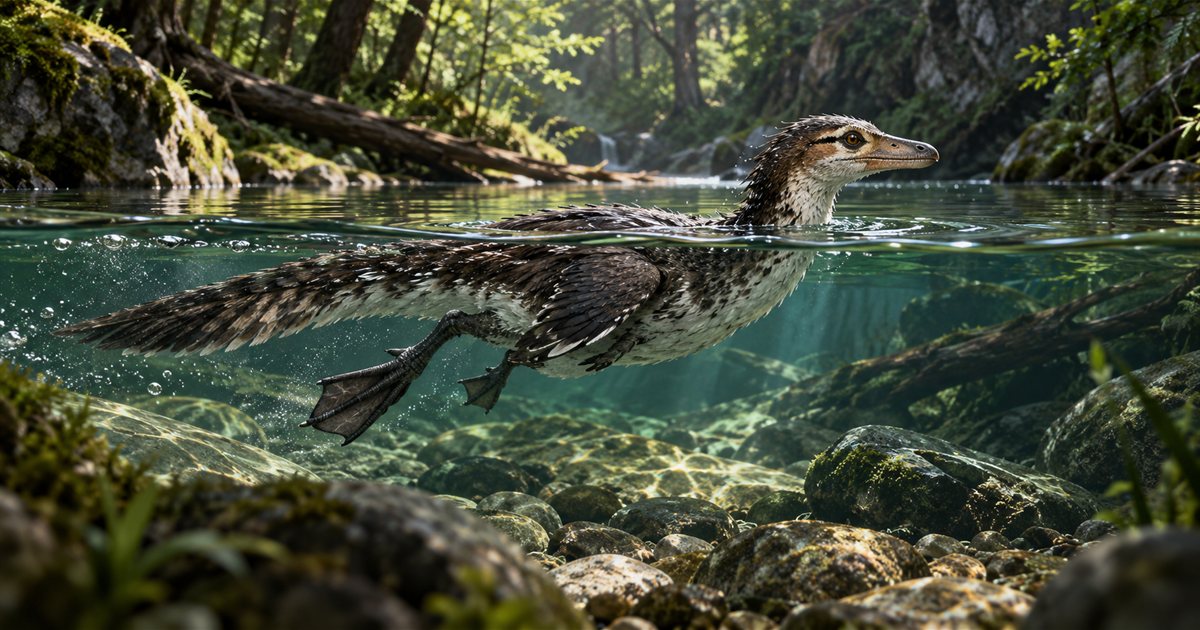
Swimming in The Isle EVRIMA is easier to understand when you separate movement, oxygen and the route back out. A dinosaur suited to water can offer different options from a land animal, and a familiar shoreline can become difficult to leave once you approach it from below. Learn your current animal's controls in a short, manageable stretch before committing to a long dive.
Check your bindings, identify the surface and a usable shore, then try a short movement away and back. Watch oxygen and stamina separately. Extend the route only after you understand how that dinosaur moves, surfaces and leaves the water.
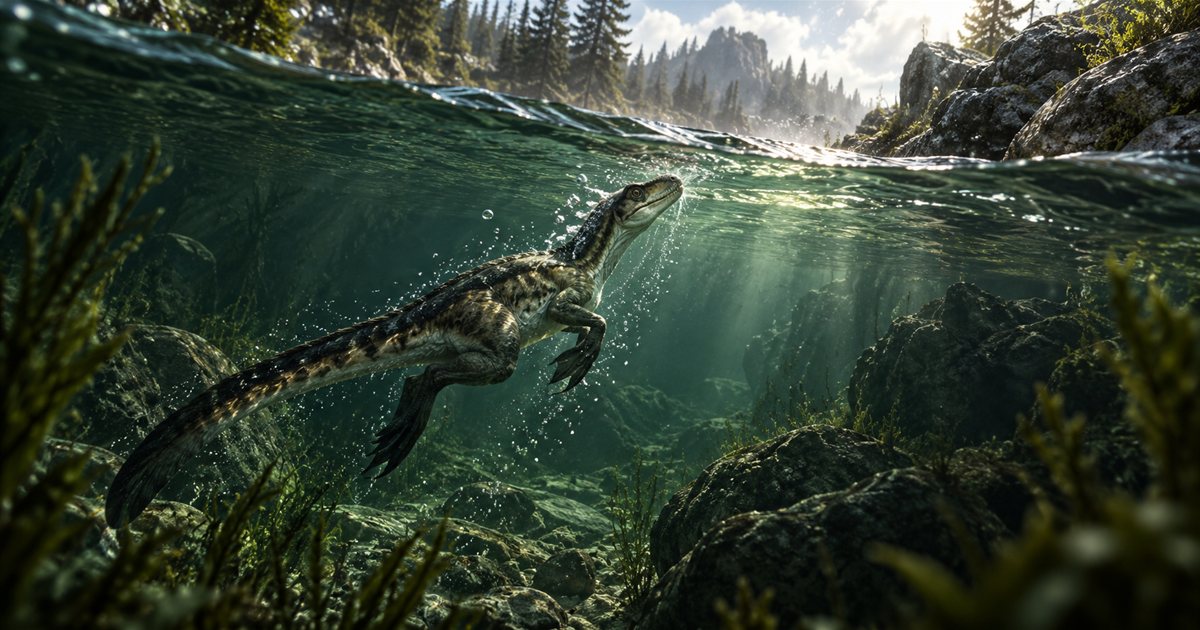
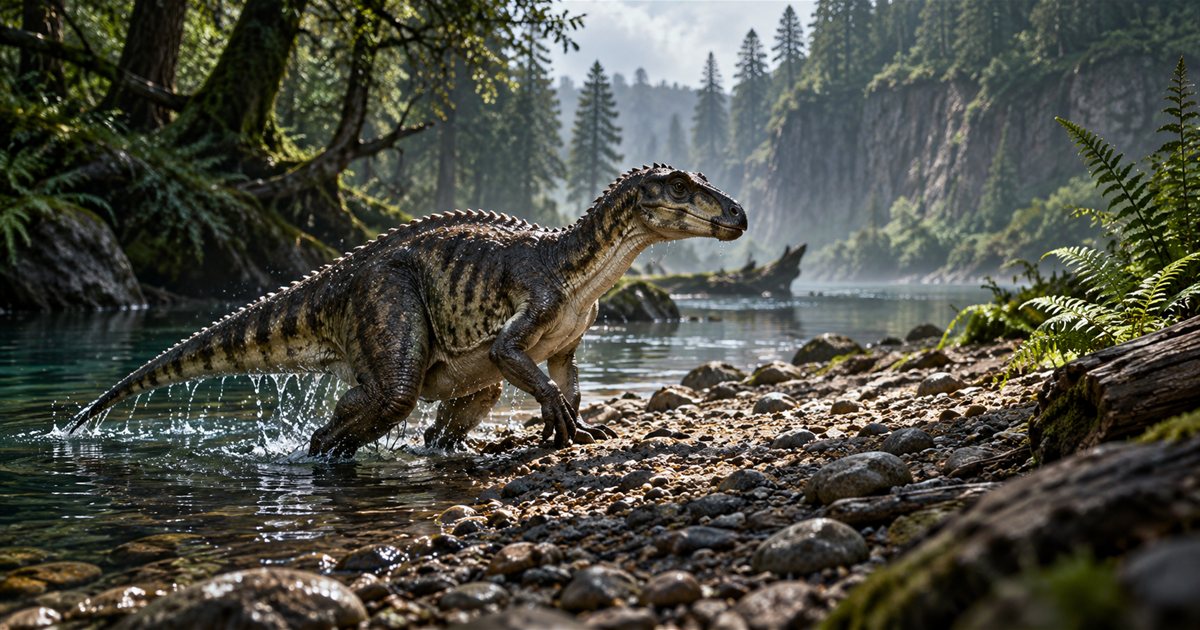
The three AI-generated illustrations show movement ideas, not actual EVRIMA screenshots, a depth chart or a specific Gateway crossing. Water behavior can change between builds and species. Use your current controls and condition indicators as the final reference.
Start with the animal you are playing
Do not assume every dinosaur has the same underwater movement options. Deinosuchus and Beipiaosaurus have water-focused playstyles, while a land dinosaur may enter a swim simply because the ground drops away. The ability to cross some water does not establish that an animal can actively dive, stay submerged for the same time or escape up the same bank.
Read the Deinosuchus guide or Beipiaosaurus guide for the animal-specific context. If you only need to get a land dinosaur across a river, the river-crossing guide focuses on choosing an approach and exit. This page concentrates on controlling movement once you are in the water.
Check your bindings before relying on remembered controls
The developers' original Deinosuchus instructions described Spacebar for swimming upward and Ctrl for swimming downward. Those are historical default starting points for that animal, rather than a promise that every current species or custom layout behaves identically.
| Action to verify | What to check | Why it matters |
|---|---|---|
| Forward movement and turning | Your movement bindings and response in water | A route is only useful if you can turn back along it |
| Move toward the surface | The current swim-up action for an animal that supports it | Looking upward and actually gaining height are different things |
| Move downward | The current dive or swim-down action, where supported | A land crouch binding may have a water-specific use |
| Special aquatic action | The instructions for your species and current build | Latching or other abilities are not shared by every dinosaur |
| Open condition information | Your character-panel binding | Oxygen, stamina and other warnings need their own checks |
Use the controls guide if you have rebound keys or cannot identify an action. Test one input at a time near a return point. If something does not respond, confirm the species, movement state and binding before assuming the game has stopped accepting all input.
Oxygen and stamina answer different questions
Oxygen concerns your time submerged before you need air. Stamina concerns the resources available for movement and other actions. Enough of one does not guarantee enough of the other. Check both instead of treating a comfortable-looking stamina indicator as permission to continue a dive.
The official oxygen-system introduction establishes this as a separate part of aquatic play. It does not provide a universal timer for every current dinosaur, growth stage, condition or later update. This guide deliberately avoids a single safe number of seconds or a guaranteed diving depth.
Read the HUD guide for condition checks and the stamina guide for planning around movement resources. Turn back while you still have room to correct a mistake. The return may involve turning, climbing through the water and approaching the shore, rather than simply repeating the outward distance.
Keep track of the surface and your exit
Before descending, pick a simple reference: a visible shore, a recognizable rock or a short route back toward open water above you. Camera movement can make a dive feel less clear than it looked from land. Pause to reorient rather than spending your remaining margin pushing against an obstacle.
A dark shape overhead is not automatically the open surface, and a steep bank is not automatically a usable exit. Avoid exploring under unfamiliar overhangs during a first practice. If you lose track of direction, focus on regaining a clear view and returning to air instead of adding another turn deeper into the route.
A short swimming and diving practice routine
- Choose a modest starting point. Find a place where the entry, surface and intended exit are easy to identify.
- Check your condition. Begin with enough margin to practise rather than testing controls during an emergency.
- Try movement close to the shore. Turn and come back before increasing the distance.
- Test vertical movement if your animal supports it. Make a shallow descent and return to air using the correct action.
- Leave the water. Confirm that your intended exit is usable from the water side.
- Review the attempt. If orientation, controls or the exit were unclear, repeat the short version before extending it.
This routine is a way to learn the controls, not a guarantee that a place is free of other players. Keep watching the scene and abandon the exercise if the surroundings no longer give you enough room to practise.
Beipiaosaurus and Deinosuchus need their own expectations
For Beipiaosaurus, riverbed latching is a species-specific part of the learning process. Check the dedicated guide and your current bindings before trying it; do not interpret holding onto the bottom as permission to ignore oxygen. Practise releasing and returning to the surface as part of the same action.
For Deinosuchus, learn the relationship between underwater travel, surfacing and reaching land before extending a patrol. Being adapted to water does not make every bank accessible or every underwater position useful. Neither specialist should be treated as a template for all other dinosaurs.
Check the last few metres back to land
A destination can look close while its bank is too awkward to climb at the place you chose. Aim for an exit you have actually examined. If you need an alternative, make that decision early enough to travel along the shoreline rather than discovering the problem with very little margin remaining.
The terrain guide covers reading slopes and route obstacles. After reaching land, reassess your condition before immediately starting another long movement. Swimming across water also does not establish that the water was suitable to drink; use the drinking-water guide for that separate decision.
Use map context without confusing it with underwater feedback
TheIsleMinimap can help you place your supplied Asset Location coordinates in a wider route. Update them when appropriate and compare the intended shore with nearby mapped features. The app tutorial explains position reading and the coordinate workflow.
A map marker near land helps with orientation. Inspect the actual bank for a usable exit before swimming toward it.
Quick questions
Can every dinosaur dive with Ctrl?
No universal rule should be inferred from the historical Deinosuchus defaults. Check the options supported by your animal, the current build and your own bindings.
Does reaching the surface finish the whole return?
It restores access to air when you have actually surfaced, but you may still need to travel to a usable shore. Keep those two stages separate when planning.
Should I learn diving during a long crossing?
A short practice with a known return is easier to understand. Learn the movement and exit first, then decide whether a longer route suits your current condition.