
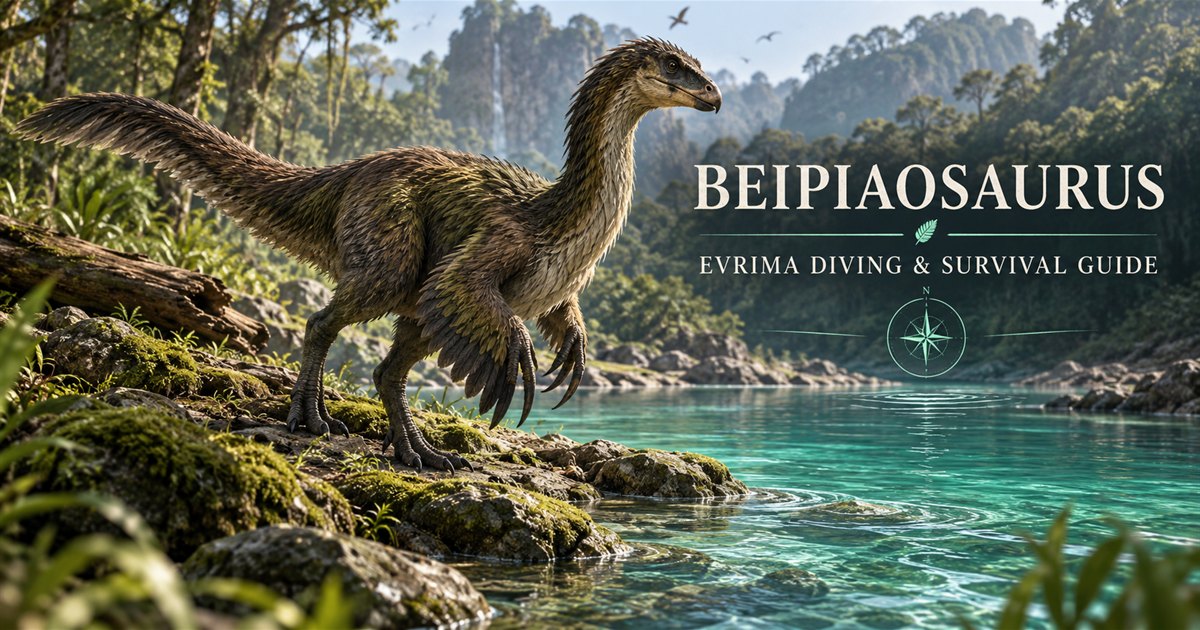
Want to learn Beipiaosaurus in The Isle EVRIMA? Plan each water trip around three things: where you will get air, what food you are looking for and which bank you can actually leave from.
This Beipi guide covers diving practice, riverbed latching, controls, diet and Gateway river travel. It is for EVRIMA, not Legacy. Check your current Controls menu, Status Report and server rules. The four AI-generated illustrations are teaching concepts, not official screenshots, exact animations, oxygen gauges or accurate Gateway geography.
Beipiaosaurus controls: land and water are different
Update 6.5's released notes introduced Beipiaosaurus and its foraging mechanic to EVRIMA. A 2023 developer explanation discusses breaching and oxygen recovery. These are historical references, not current oxygen or movement formulas.
The fan-made Evrima Quick Guide carries an updating notice. Compare its default-input examples with your current controls:
- LMB on land: claw action; in water the reference lists a beak action
- RMB on land: beak action; in water the reference lists a claw action
- Alt + LMB: directional alternate action
- Crouch, normally Ctrl, at the riverbed: latch to the bottom
- Space: release a riverbed latch; the community reference also describes held Space for water leaping
Learn one state at a time. Try the land actions away from other players, then practise movement in water where you can see a usable bank. Watch the actual response rather than assuming the same mouse button always produces the same animation.
Keep your current binding names in view when following a tutorial. A remapped crouch, jump or movement action can make default-key advice confusing. Practise release and return controls before trying to combine underwater movement with food collection.
How to dive as Beipi: learn descent before latching
Start near a visible, gently sloping exit. From the surface, use your current downward swim/dive control and movement bindings to make a short descent, then return to air. Check the game's Controls menu if your input does not move you down; do not assume a tutorial's default key matches your setup.
Swimming below the surface and attaching to the riverbed are separate actions. First get down to the bottom, then try the latch input. Pressing the riverbed-latch control while still floating is not the same thing as completing that sequence.
The community swimming and latching reference describes reaching the bottom, using crouch to attach and using Space to release. The August 2026 developer archive also refers to Beipi's existing manual water latch while discussing another species' design. That does not give Beipi the upcoming species' mechanics.
Practise a complete small loop: descend, attach, move a short distance, release and surface. Only extend the route when you can repeat that loop without searching for the return control. A successful attachment is not proof that you can stay down indefinitely.
Inspect the bank from water as well as from land. Roots, rocks or a steep edge can make an apparently close exit awkward. Keep an alternative nearby, and do not let the first practice trip become an unplanned swim around a large obstacle.
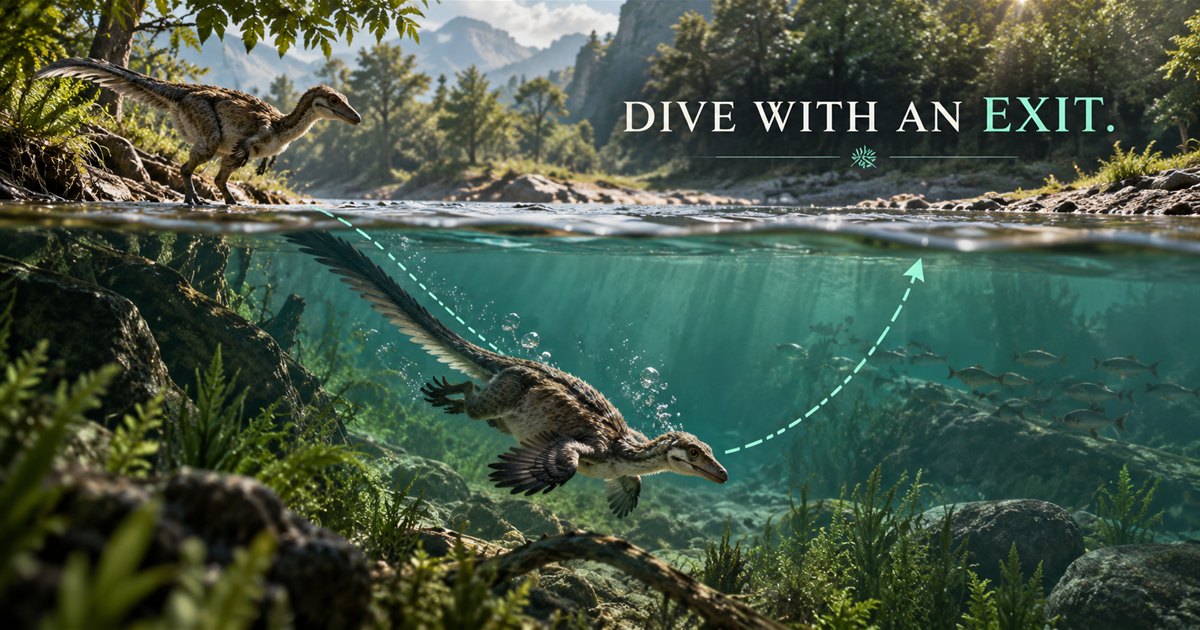
Beipi oxygen and leaping: watch the game, not a stopwatch
Check your oxygen while moving, feeding and attached to the bottom. A calm-looking position can still consume the time you need to get back to air. Decide to surface with margin rather than waiting until the trip becomes urgent.
A riverbed latch is a movement tool, not protection from drowning. If you stop to look around or line up a food interaction, keep the release and surface route in mind. Do not assume that being attached changes every survival need.
Practise leaping separately from foraging. Learn where the movement sends you and where you land before using it around rocks or a narrow bank. Breaching does not certify the water around you is safe, and an old video cannot promise a permanent leap height.
This guide does not recommend a fixed underwater timer, number of breaches or minimum recovery amount. Current condition, life stage and game changes can affect the experience. Your live oxygen and stamina feedback are more useful than timing a historical clip.
If visibility is poor, shorten the trip. Do not continue into unknown depth simply because food appeared ahead. Our night vision guide covers seeing and navigating without suggesting that visibility reveals every hidden animal.
Beipiaosaurus diet: connect foraging with the next air stop
Beipi belongs to EVRIMA's omnivore roster. Check preferred foods and nutrient needs in your current Status Report. An edible snack and the nutrient balance you need are not always the same problem.
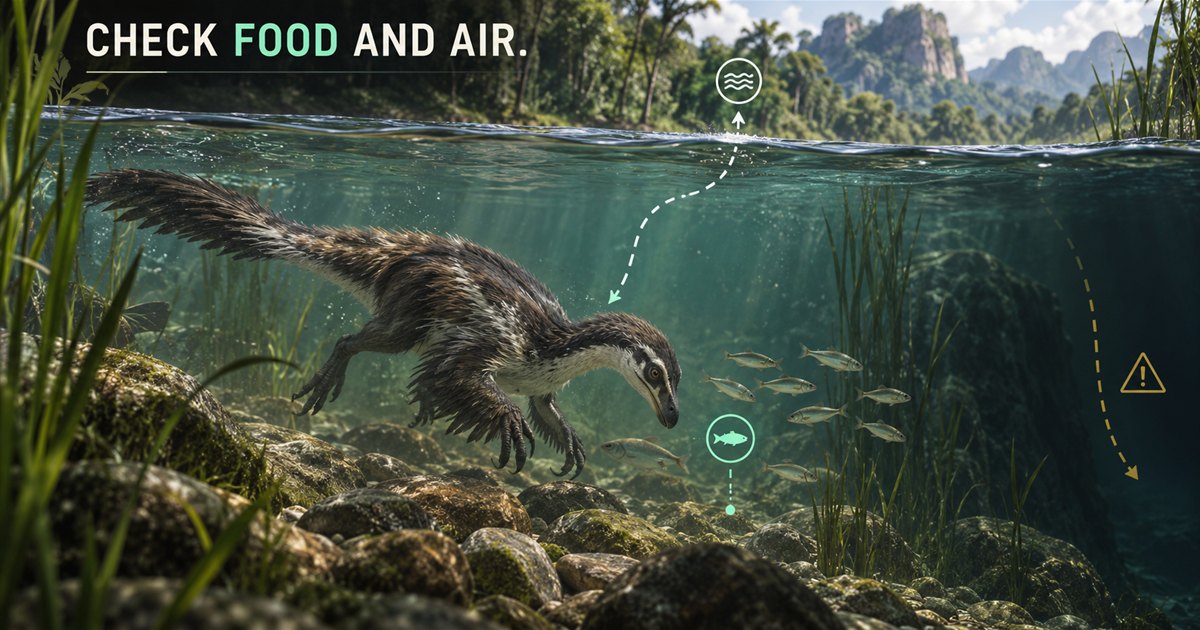
Choose one manageable food opportunity for the dive rather than trying to collect everything you can see. Approach it with a return-to-air point already selected. If the interaction takes longer than expected, be willing to leave it for another trip.
The fan-made fishing and foraging reference describes riverbed latching, holding Q for a food cue and using the E interaction at a suitable digging site. Compare those examples with your current prompts; a map cannot activate the interaction for you.
Small fish and foraging sites are opportunities to inspect, not guaranteed meals. Check the game's feedback and whether the food can actually be collected by your current animal. Do not use a historical growth threshold or food list as a permanent rule.
After feeding, reassess hunger, nutrients and your route. If you have met the immediate need, surfacing and regrouping may be a better next step than extending the same dive. Keep food planning separate from curiosity about what is farther downstream.
Our food and diet guide explains the wider nutrient system. The AI spawns guide explains why mapped animal references are not live prey tracking or guaranteed spawns.
Gateway river travel: choose the next bank, not just the water
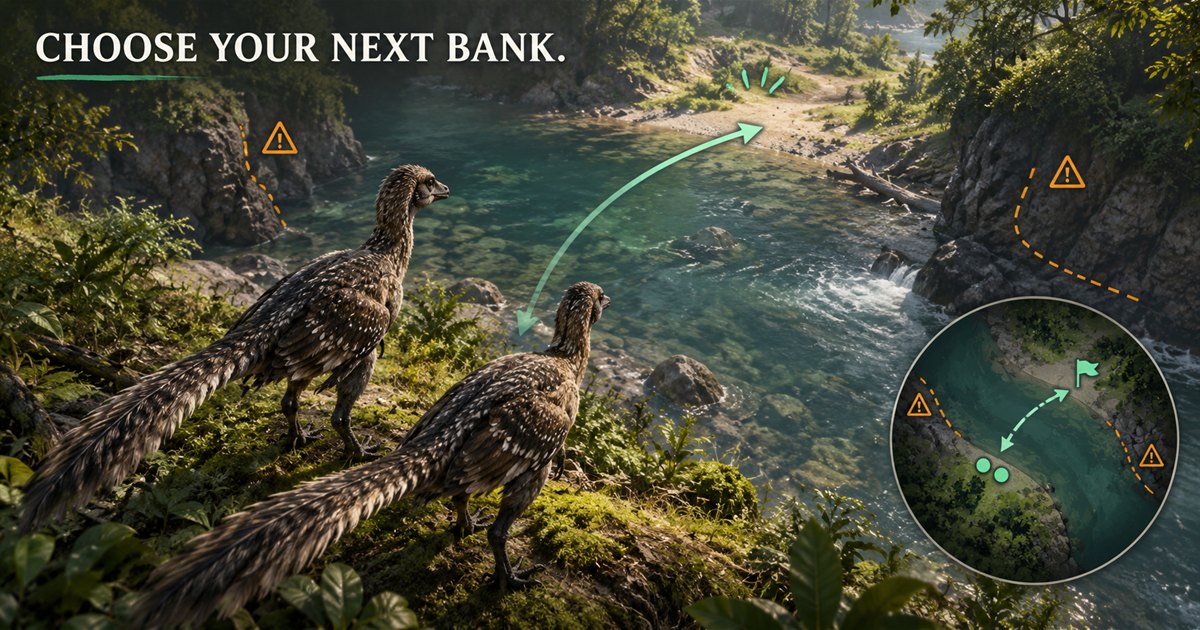
A river journey needs usable exits. Before leaving your familiar section, identify the next bank you want to reach and consider an alternative. A waterway continuing on the map does not mean every side of it is easy to climb out of.
Do not treat aquatic movement as immunity to aquatic predators. A quiet surface or an empty-looking section does not prove Deinosuchus is absent. Read the Deinosuchus guide for context and keep judging the live situation yourself.
With companions, agree on where to surface and wait. Calling only for everyone to follow can leave one player underwater while another is already moving along the bank. State whether you are feeding, practising a latch or travelling to the next landmark.
For a juvenile, keep the first circuit small. Learn a nearby air return, a feeding reference and a recognisable meeting point. Do not copy an adult's distance or combat confidence without considering your own condition and life stage.
Use the water guide for approach planning and the stamina guide for recovery decisions. Neither a map nor a written guide can certify that a live bank is safe.
Using TheIsleMinimap for Beipi navigation
TheIsleMinimap's map layers help relate your latest position to mapped landmarks and resources. Inspect depth, currents, banks and live animals in the game; the map cannot confirm those conditions for you.
Copy Asset Location to update your marker, or use the enabled screen reader with your confirmed area while Lat and Long are visible. It shows the latest accepted reading, not uninterrupted tracking while the panel is hidden. The coordinates guide explains setup.
Private app squads support up to four players and shared latest positions. That app limit is not The Isle's in-game group limit. Solo Lifetime provides local navigation; Squad plans include online squad features. See the current plans for available options.
Beipiaosaurus questions: diving, latching and food
Why will Beipi not latch while floating?
Descend to the riverbed first, then use your current crouch/latch binding. The community reference distinguishes that attachment from ordinary swimming.
How do you release a riverbed latch?
The community default-input reference uses Space. Check your current jump/release binding and practise returning to air before taking a longer dive.
Can Beipi stay underwater indefinitely?
No indefinite underwater safety is promised. Watch oxygen and keep a usable route to air even while attached to the bottom.
Does the minimap detect fish or crocodiles?
No. It provides mapped references and your latest accepted position, not live food or hidden-enemy detection.