
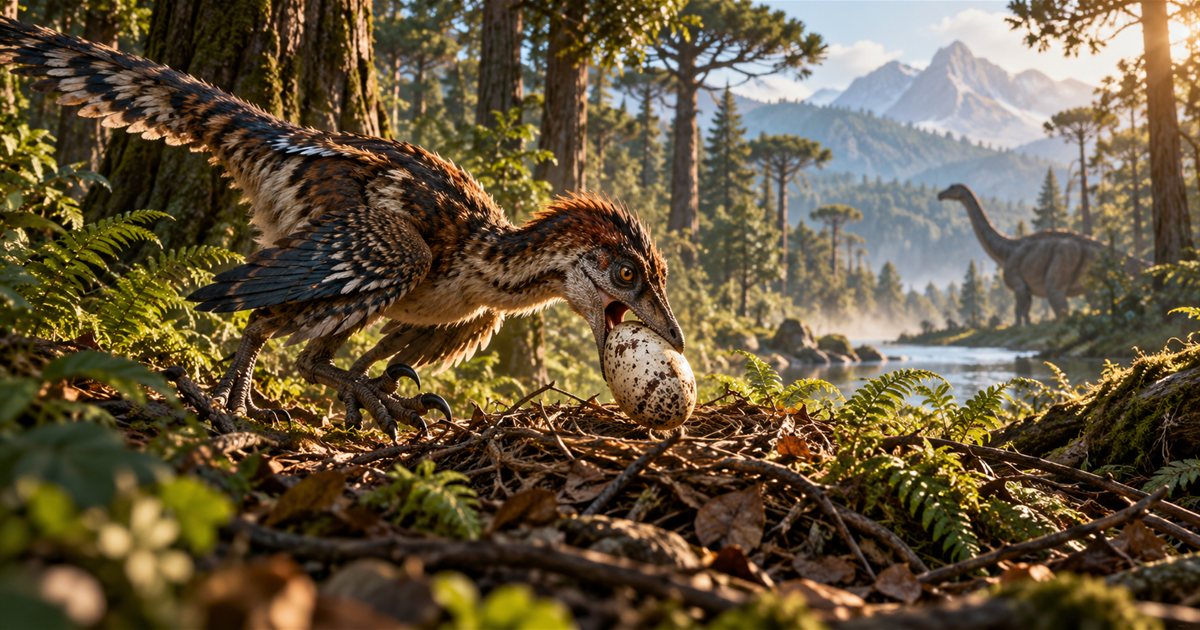
An egg near a nest can be a food opportunity and a reason to leave the area. The Isle EVRIMA gives you nest and egg interactions, but finding an object does not tell you whether approaching it is worthwhile. This guide separates the food decision, the interaction and the departure so you can assess each before committing.
Check the server rules, your dinosaur's food needs and the activity around the nest. Identify an exit, use the egg interaction shown in your current game and reassess before staying to feed or returning for another egg. Do not assume a quiet nest is abandoned.
The three AI-generated illustrations are conceptual artwork. The nests, egg sizes and dotted routes are not screenshots, exact Gateway locations or instructions for a particular species animation.
Egg food and nesting are different workflows
The official October 2024 DevBlog #53 describes eggs being included in the diet system, taken from nests or eligible female corpses, and given pickup, eating and scent support. It also says that the mechanic would continue to change. That documents the feature's development; it is not a current promise that every dinosaur can handle every egg the same way.
Taking an egg as food is separate from joining a nest as a hatchling or managing your own clutch. If you want to start a dinosaur family, use our nesting guide. A nest invitation, an available hatchling slot and a physical egg interaction should not be treated as interchangeable things.
This article concerns EVRIMA. Legacy instructions and footage from an experimental build can show a different workflow. Follow the information available to your current playable and any additional rules on the server.
Check whether the opportunity serves your diet
Before taking a risk for an egg, look at your dinosaur's current hunger and diet information. Needing food soon and seeking a specific nutrient are different priorities. The egg's existence alone does not establish that it is your best next meal.
Compare the information the game gives you with the route and exposure involved. If your immediate needs are already comfortable, you have time to observe or choose something else. If starvation is urgent, a defended nest may still be less practical than a suitable nearby alternative.
| Question | What to inspect | Reason to reconsider |
|---|---|---|
| Do I need this food? | The current hunger and diet panel. | You are taking exposure without solving an immediate need. |
| Can I interact with it? | The actual prompt and your playable's controls. | An old video shows an option your current game does not offer. |
| Can I leave? | A route your present dinosaur can use. | The only exit passes through a defender or difficult terrain. |
| Should I stay? | Activity around the nest and the time your action requires. | New movement, calls or an approaching animal changes the situation. |
For broader feeding choices, see the food and diet guide and the carcass and organ guide. This article does not assign a fixed nutrient reward to every egg or describe eggs as a guaranteed growth shortcut.
A nest is something to verify in the game
Watch and listen for activity, then confirm what is actually present. A clearing, a migration area or a remembered nesting spot is not a live nest detector. Player-built nesting activity can change between visits, and not every apparent nesting opportunity is accessible or unattended.
Do not confuse finding a public nest option in a menu with having discovered a safe physical approach to that family. The menu workflow concerns joining a nest. Moving through the environment to interact with an egg is a separate journey.
The official nesting-development archive describes public and private eggs, parental acceptance and damage to nests. Those historical notes explain why access and physical interactions are different; they are not permission to ignore a community server's nesting rules.
Make the exit decision before the pickup
- Observe from a manageable distance. Look for parents, other animals and movement through nearby cover.
- Read the ground. Notice slopes, water, obstacles and narrow gaps along the approach.
- Choose a departure direction. Use a route you can describe and reach with your present animal.
- Check your movement resources. Leave enough margin to respond to something unexpected.
- Reassess at the nest. New activity can make leaving without an egg the better outcome.
This is a decision sequence, not an assurance that a nest raid succeeds. You cannot establish safety simply by waiting a set number of seconds. An animal out of view may still return, and a second player can change the encounter while you are interacting.
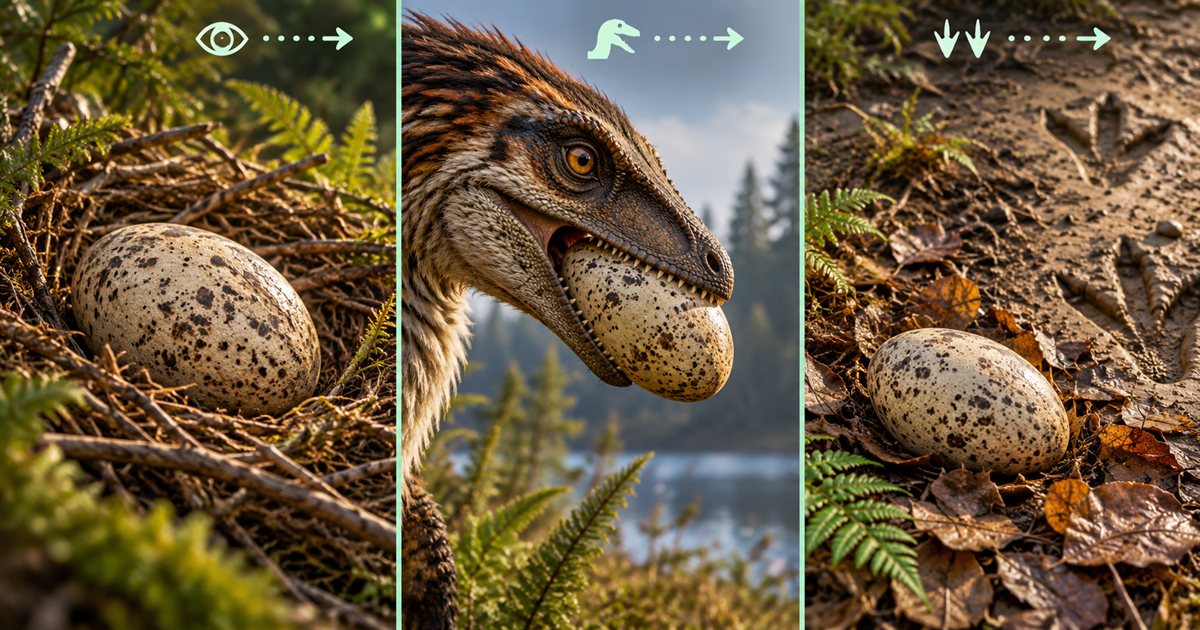
Picking up, moving and eating an egg
Approach the object closely enough to read the available interaction. Use the corresponding control from your own bindings. Do not assume that a single copied key sequence covers picking up, carrying, dropping and eating for every animal and build.
After the input, look at the result. Is the egg still in the nest, held by your dinosaur, on the ground or being consumed? Choose the next action from that observed state. Repeatedly pressing several interaction keys without checking can make an unclear situation harder to diagnose.
If the game allows you to move the egg, consider whether moving first is sensible given the time, terrain and nearby animals. Do not plan around an untested jump, swim or attack while carrying. A route that works with an empty mouth is not proof that every other action remains available.
Food should be judged from the current game's feedback, not the illustrated egg's size. The artwork here is a teaching aid and does not encode a species, nutrient value or carrying limit.
Leaving with food is not the end of the encounter
Use the exit you assessed, while remaining willing to change it if another animal blocks the way. Keep looking at the scene instead of concentrating entirely on the object. If you lose the egg or the opportunity becomes impractical, reassess rather than automatically returning into the same danger.
Taking one egg is also not a reason to repeat the trip until your resources are exhausted. The surroundings can change after the first interaction. Ask whether you still need more food and whether the previous route remains usable.
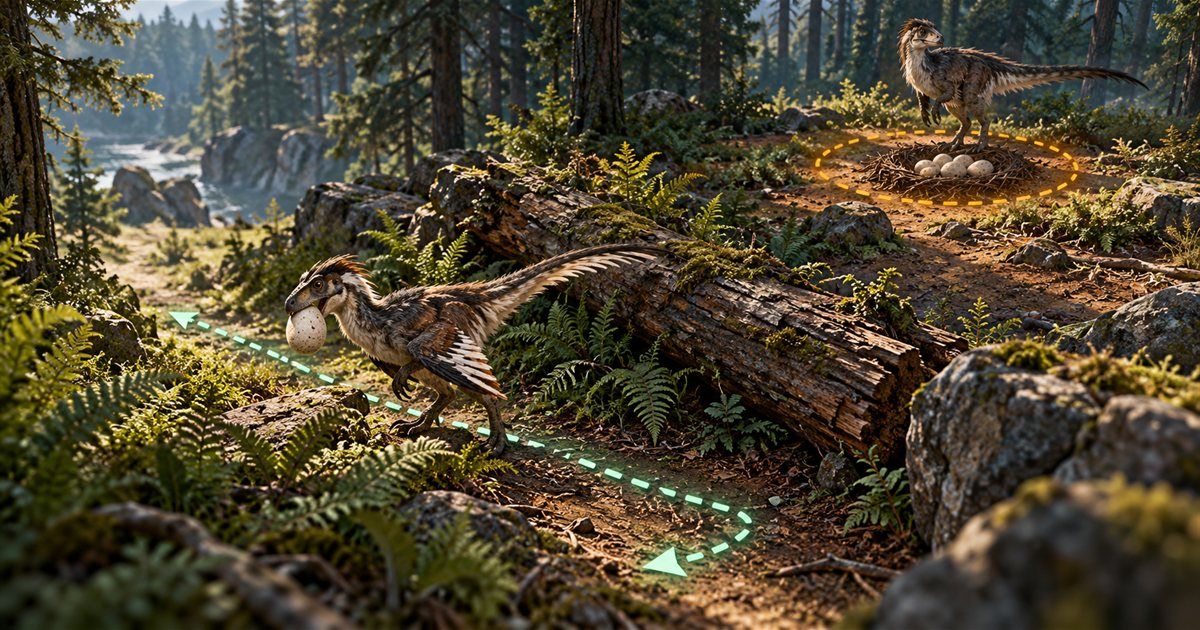
If you are looking after the nest
Agree who is remaining nearby and who is making food or water trips. Tell the group before leaving, and choose return landmarks you can recognize. If everyone assumes somebody else is watching, a routine supply journey can leave the family less prepared than intended.
Keep defensive decisions within the server's rules. A nearby animal does not establish what action it has taken, and defending a nest should not mean chasing so far that the nest itself is forgotten. Communicate what you actually observed.
Our grouping guide covers coordinating with friends. The tracking guide explains why footprints are evidence to investigate rather than a complete account of who approached your nest.
Use TheIsleMinimap for the journey, not nest detection
Refresh your own position using copied Asset Location coordinates or your enabled reading mode. Compare nearby terrain and landmarks before choosing a return route. With private squad sharing, up to four participants can coordinate the latest positions they supply and a shared destination.
A shared pin marks a nest your group has located in-game. Share the squad invitation privately.
When an egg interaction does not work
Check the prompt, binding, object position and what your dinosaur is currently doing. If the object is unavailable or the current playable has no suitable interaction, repeating the same input is unlikely to clarify the problem. Move back to a manageable position and observe what changed.
For a repeatable game issue, record your species, growth, branch, build, server and the exact action that failed. A short clip can distinguish an unavailable interaction from an input or synchronization problem. Do not delete your game settings as a first response to one failed pickup.
Egg stealing: quick answers
Can every dinosaur steal or eat every egg?
Do not assume that. Check your current playable, diet information and interaction prompts. Historical feature announcements are not a permanent species-eligibility list.
Does joining a nest let me collect its eggs?
Joining as a hatchling and physically interacting with an egg are different workflows. Use the appropriate menu or interaction for your goal.
Does an unattended-looking nest mean it is abandoned?
No. A parent or another animal may be out of view. Keep reassessing rather than relying on a fixed waiting period.
Can the app show where eggs are right now?
No. Its navigation and voluntary squad sharing do not provide live nest or egg detection.