
Maiasaura suits players who enjoy learning how posture changes their movement and attacks. Gallimimus suits players who enjoy exploring and coordinating a moving flock. Pick the animal whose food trips, regrouping decisions and practice sessions sound interesting to you. Those activities will shape much of your time on Gateway.
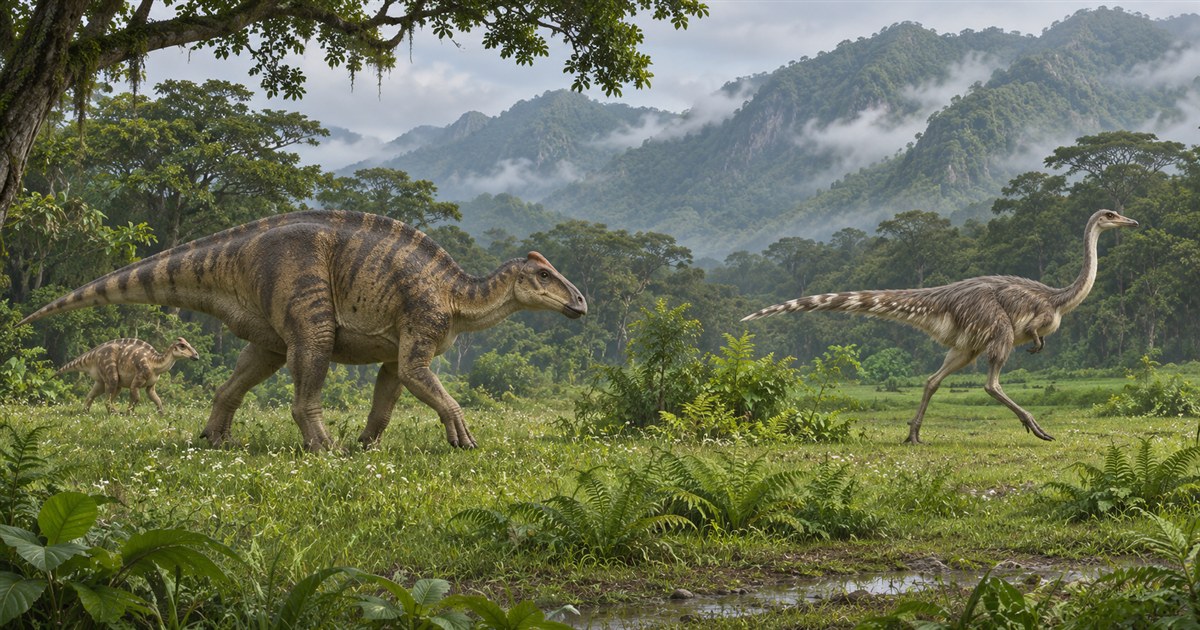
The cover is an AI-generated conceptual illustration of the two animals in a forest-edge setting.
Compare an ordinary session
| What you enjoy | Try Maiasaura | Try Gallimimus |
|---|---|---|
| Learning movement | Compare a short journey in each posture and practise changing between them. | Practise a route with clear turns, stopping points and room to regroup. |
| Learning attacks | See how stance, camera direction and movement affect your available actions. | Learn how an attack affects your momentum and the direction you can leave. |
| Feeding | Build trips around what the live food panel says your Maia needs. | Learn the food and foraging opportunities your current Galli can use. |
| Playing together | Keep the next stop reachable for younger or recovering herd members. | Keep a flock together through direction changes and planned pauses. |
The developers describe Maiasaura’s bipedal and quadrupedal stances, together with its stance-dependent attacks, in their official development and patch archive. Their Gallimimus development archive discusses the grouped Mobilize ability. Use these for the design background and check current controls and prompts in the game when you practise.
What to practise with Maiasaura
Choose a small piece of open ground and make a simple loop. Walk out, turn, stop and return in one posture. Repeat in the other, then change posture during a quiet part of the journey. Notice which transition you can recognise immediately and where you need to slow down to understand what happened.
Add attacks after you can repeat the movement. Try an action while standing, then compare it with the same input after changing posture. Keep the camera and movement consistent for the first comparison. Once that difference makes sense, change the direction you are looking or add movement. You will have a clearer idea of what caused the next action.
That practice is useful in a herd because the situation around you can change while you focus on another animal. Being comfortable with your current posture makes it easier to decide whether to stand, move away or give another herd member room. The Maiasaura guide expands the individual practice steps and growing routine.
What to practise with Gallimimus
Pick two visible landmarks a short distance apart. Travel between them, turn and return, paying attention to how much ground you need to change direction. Add a planned stop before the second landmark. This gives you a repeatable exercise for judging whether you can finish a turn or stop before reaching water, a drop or thick cover.
Then compare a stationary attack with one while moving. Watch the recovery and which direction you can take immediately afterward. A useful first encounter lesson is knowing what happens to your movement when you press the button. You can practise that without committing to a long chase.
Foraging adds another reason to slow down and observe. Check your food needs, investigate the opportunities shown by the game and pause to see the result. If you enjoy combining short resource stops with travel, use the Gallimimus guide to explore that routine further.
Food and travel decisions
Before leaving a familiar area, check hunger, water and the next food objective. Choose a destination that serves that objective and one place where you can stop along the way. A convenient route on one animal may be less useful on the other if their food needs send them toward different opportunities.
Use Gateway’s plant and resource filters to inspect references relevant to the trip. Confirm the resource in the live game when you arrive, then decide whether to stay or move on. Our food and diet guide covers the difference between filling hunger and addressing nutrient needs.
Playing with friends
Agree on the next stop before the group starts moving. With Maia, pay attention to who needs the slower pace and whether everyone can reach the same ground. With Galli, give a clear direction at junctions and pause when someone falls behind. In either group, a specific landmark is easier to find than a moving player saying “keep coming this way.”
A private app squad can help each member compare their latest shared position with the meetup. Each player supplies a fresh update by copying Asset Location or using their reading mode. Say which side of the landmark you are approaching from as well. The marker guide explains how player dots differ from a shared destination.
Make your choice for the next session
Choose Maiasaura if practising posture changes and learning a defensive toolkit sounds rewarding. Choose Gallimimus if you want to spend the session exploring, finding food and keeping a flock moving together. Give your first session one manageable objective, such as a resource loop or a familiar meetup, so you have time to learn the animal before extending the journey.