
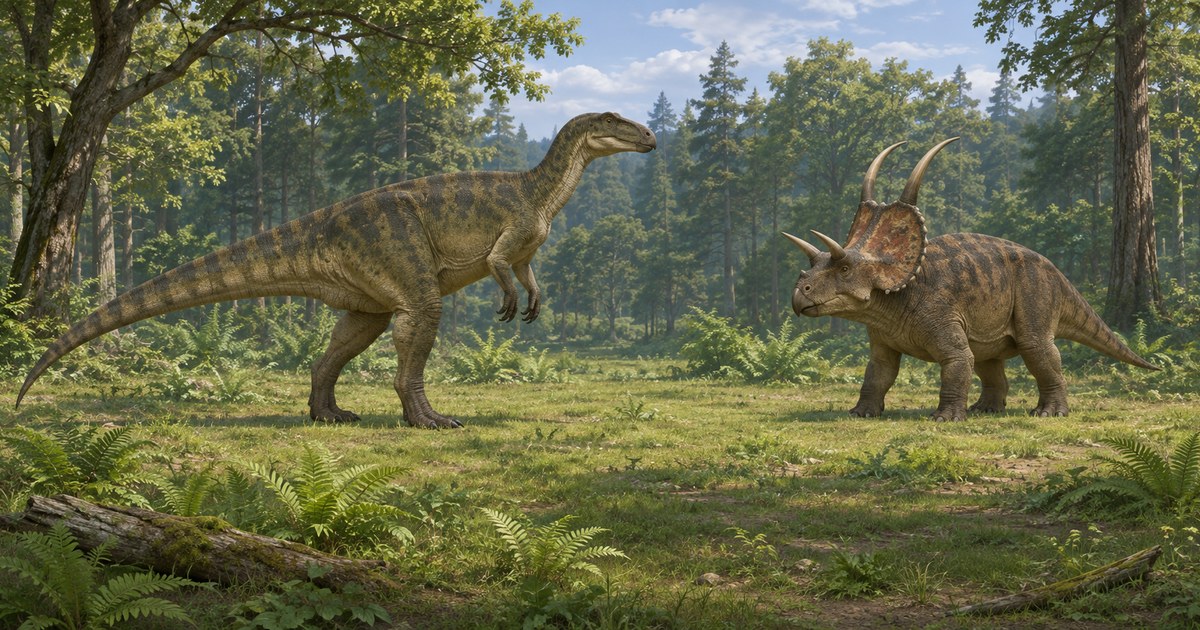
Tenontosaurus is a good choice to explore several distinct attack actions; Diabloceratops is worth trying if horn positioning and sparring interest you more. Your first decision is which set of movements you want to learn, rather than which name sounds stronger. An enjoyable ordinary session matters more than a matchup claimed in a short clip.
Would you rather practise choosing between a bite, claw, rear kick and tail slam, or learn the movement and engagement decisions around a horned animal? Start there, then compare how each feels while feeding and travelling.
Reviewed on 8 November 2026. The cover is an AI-generated conceptual illustration, not official character artwork. Historical sources below explain the different actions; they are not current damage tables or guaranteed combat results.
Teno or Diablo: what will you spend time practising?
| Learning priority | Tenontosaurus | Diabloceratops |
|---|---|---|
| Attack selection | Recognising which separate action you intend to use. | Understanding ordinary attacks and the movement involved in sparring. |
| Body orientation | Checking what is behind and beside you before using rear or tail actions. | Keeping track of your head, the other animal and the direction an engagement is moving. |
| Useful first exercise | Try each action separately before combining turns and attacks. | Learn the stance and how to manoeuvre without crowding an obstacle. |
| Group habit | Tell companions where you intend to move before they stand in that space. | Leave an engagement lane and a way for companions to reposition. |
This is a comparison of learning priorities. It does not rank exact speed, health, stamina efficiency or the number of attacks needed to defeat a particular animal. Those figures need the relevant build and circumstances to mean anything.
Tenontosaurus: choose the action before pressing it
The official 2022 EVRIMA patch archive distinguishes bite, alternate-primary claw, rear kick and alternate-secondary tail slam. That distinction explains why two attacks can feel different even though you are still playing the same herbivore. It does not establish the current balance values.
Give each action its own practice attempt. Decide what you want to do, check your bindings and watch which animation actually happens. Then repeat while turning or changing your camera view. If you learn every input while rushing away from another player, it is difficult to tell a mistaken action from poor timing.
The rear of your body deserves attention. A target you could see a moment ago may have moved by the time you act. Notice where it is now and which way you can move afterwards. Avoid turning the exercise into repeated attacks at empty space.
Choose Teno if this variety sounds interesting to learn. If it initially feels like too many actions, narrow the practice to one distinction at a time. Our Tenontosaurus guide provides the individual control reference and a longer resource routine.
Diabloceratops: learn what happens during an engagement
For Diablo, pay attention to how facing and movement fit together. The developers' 2024 reports discuss sparring, locked interactions and pushing. These are useful background for its design; use your current game controls to check the actions available in your installed build.
First observe the difference between travelling normally and manoeuvring in the relevant stance. You should understand how to turn, move and return to ordinary travel before making that change near a bank, rock or crowded group.
Once another animal is involved, watch where the interaction is taking you. Being focused on contact can make a gradual move towards a bad patch of terrain easy to miss. Check your surroundings between decisions, especially if you began with little free space.
This may appeal to you if you enjoy managing a close engagement rather than treating every button press as an isolated attack. The Diabloceratops guide gives a more detailed practice checklist. A new player does not need to learn every combination in one session.
Try the same terrain problem with both animals
Imagine a resource stop with a tree behind you and a narrow exit on one side. For Teno, ask whether the space supports the rear or tail action you intended, and where you could move next. For Diablo, ask whether you can turn and manoeuvre without the obstacle controlling the encounter.
If neither answer is comfortable, finding another approach may be more useful than changing species. An animal's toolkit does not make every piece of ground suitable for it. Practise moving around ordinary obstacles before deciding that a combat problem is only about stats.
When evaluating a route on a map, inspect the ground in-game as well. A top-down outline does not explain every bank or slope. The terrain guide and combat survival guide cover those broader decisions.
Compare feeding and travelling, too
Before spawning, consider the session you have time for. You will spend time finding food, approaching water and learning a route, not only using attacks. Judge whether you like those parts with each animal rather than evaluating an adult combat demonstration alone.
Read the preferred foods and nutrients for your current character instead of assuming a route from another herbivore meets the same needs. Make a short plan you can complete in your present condition. An inconvenient trip is worth noticing even if it never leads to a fight.
With friends, agree on a stopping place and pace before leaving. Make it possible for the player learning controls to pause without losing everyone. If you use shared minimap markers, refresh positions before regrouping; a friend's old capture is not their continuously tracked location.
A fair way to decide which you prefer
- Check the controls first. Identify action names in your current bindings.
- Practise one distinction. For Teno, separate ordinary and alternate actions; for Diablo, compare normal movement with the stance you are learning.
- Complete a normal trip. Include a food decision, a water approach and a place to regroup.
- Write down the awkward part. Was it choosing an input, watching another approach or navigating terrain?
- Give the other animal a comparable attempt. One unusually busy server encounter is a poor comparison with an otherwise quiet session.
Choose the animal whose mistakes you want to understand. Familiarity develops faster when you can identify a specific decision to improve, rather than changing dinosaur after every difficult encounter.
Tenontosaurus versus Diabloceratops questions
Is this a prediction of who wins a Teno-versus-Diablo fight?
No. Growth, condition, terrain and the players' actions affect the outcome. The comparison helps you choose a character to learn.
Should I copy a default key combination exactly?
Only if it matches your bindings. Use the action names in your game's controls when you have changed keys.
Do they need different minimap settings?
You can use the same basic position and map controls. Choose helpful layers for your trip, and check the actual food requirements in The Isle.