
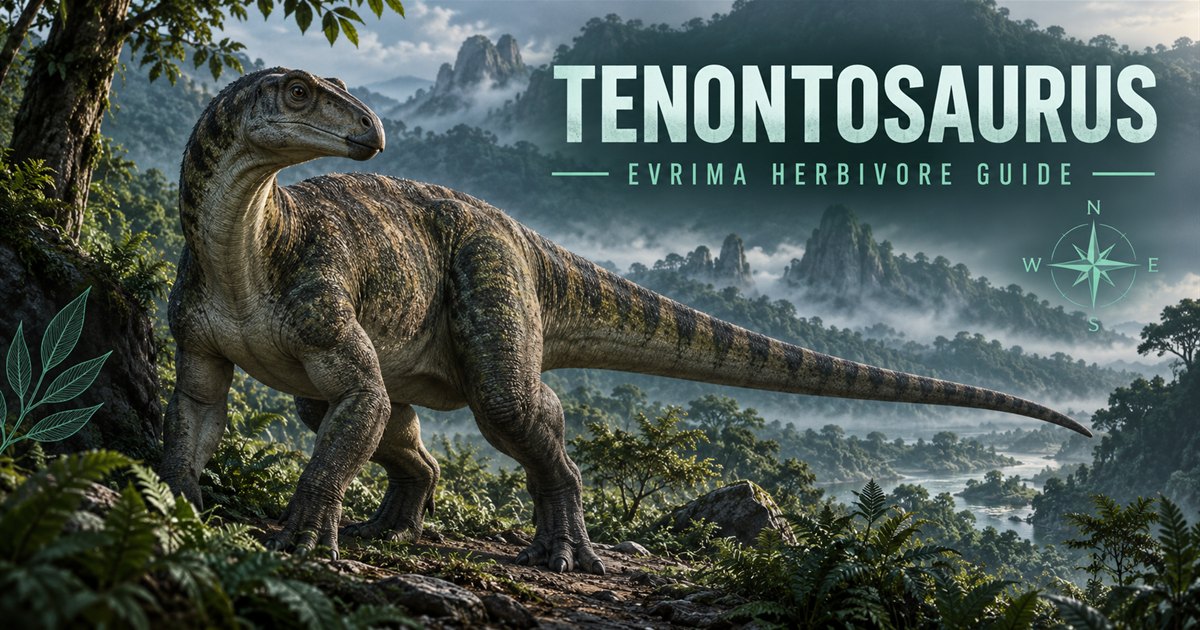
Learning Tenontosaurus in The Isle EVRIMA? Start by separating the bite, claw, rear kick and tail slam. Knowing which action you are asking for is more useful than repeating a mouse button while hoping the right attack comes out.
This Tenonto guide covers controls, diet, juvenile survival and travelling with friends on Gateway. It is for EVRIMA, not Legacy. Check your current Controls menu, Status Report and server rules. The four AI-generated illustrations are teaching concepts, not official screenshots, exact animations, attack ranges or accurate Gateway geography.
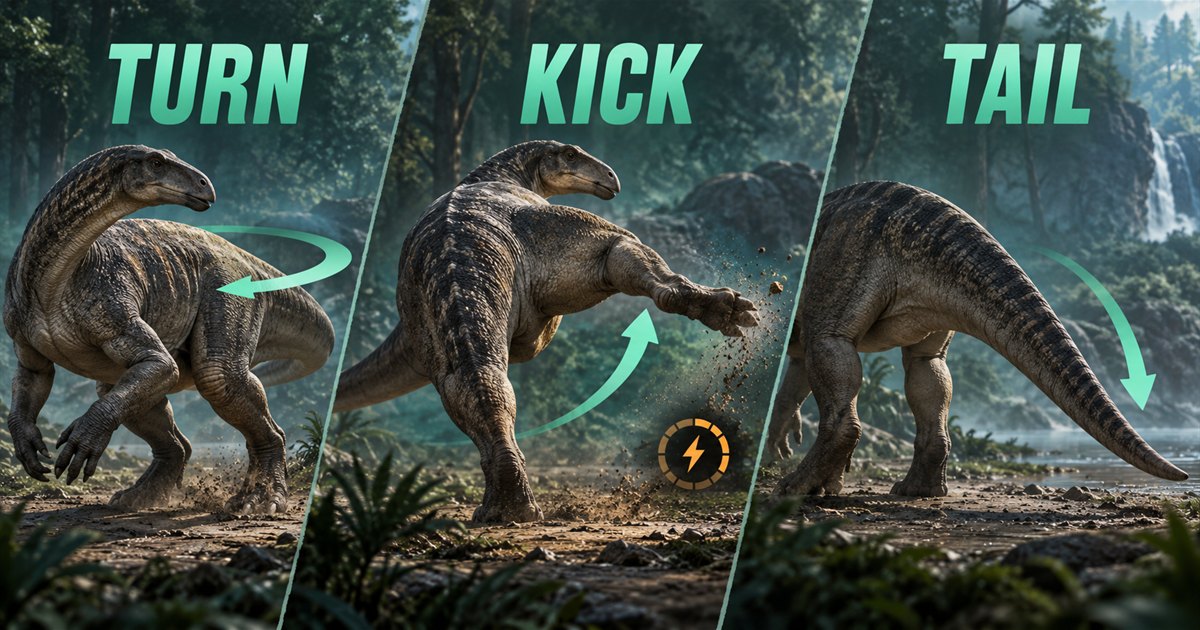
Tenontosaurus controls: bite, claw, rear kick and tail slam
Official released patch notes from 2022 distinguish Tenonto's bite, alternate-primary claw, secondary rear kick and alternate-secondary tail slam. Those historical balance notes establish separate actions, not current damage or stun values.
The fan-made Evrima Quick Guide carries an updating notice. Compare its default inputs with your current bindings:
- LMB: bite
- Alt + LMB: directional claw action
- RMB: rear kick
- Alt + RMB: directional tail slam
Test one action at a time on suitable empty ground. First identify the ordinary primary and secondary actions, then add the alternate input. Watch the actual movement and your stamina before changing facing and repeating the exercise.
If you rebound keys, use the action names in your Controls menu rather than copying the default buttons literally. Also check the difference between an alternate attack and turning your animal. A directional input is not the same thing as ordinary movement toward a target.
Do not use an old clip as a promise of a guaranteed stun combination. Growth, condition, timing and balance changes affect combat. This guide avoids fixed damage tables, permanent cooldowns and claims that a single input wins every encounter.
Rear kick or tail slam: check facing and your next move
Before attacking, identify where the other animal is relative to your body. A rear kick and a directional tail action ask different questions of your positioning. If you cannot tell which input you are using, slow down and practise the controls before depending on them during a fight.
Leave space to move after the action. A rock, tree or steep edge behind you can turn a missed attack into an awkward recovery. Look for a usable exit rather than focusing entirely on keeping the other animal in view.
Watch your current stamina and avoid spending it on repeated empty attacks. Reserve gives you choices: reposition, leave a crowded area or stop pushing an encounter. The decision to disengage is still available even if you started with a defensive position.
If an attack misses, check movement, facing and terrain before assuming a broken input. An opponent can change direction while the action is happening. This article does not promise an automatic hit, exact knockdown threshold or a universally safe position against a particular species.
With companions nearby, leave enough room for each player to see and act. Crowding together may make it harder to tell where everyone is going. Agree on a regroup point and follow server combat rules instead of treating coordination as permission to ignore them.
Tenontosaurus diet: choose a useful feeding route
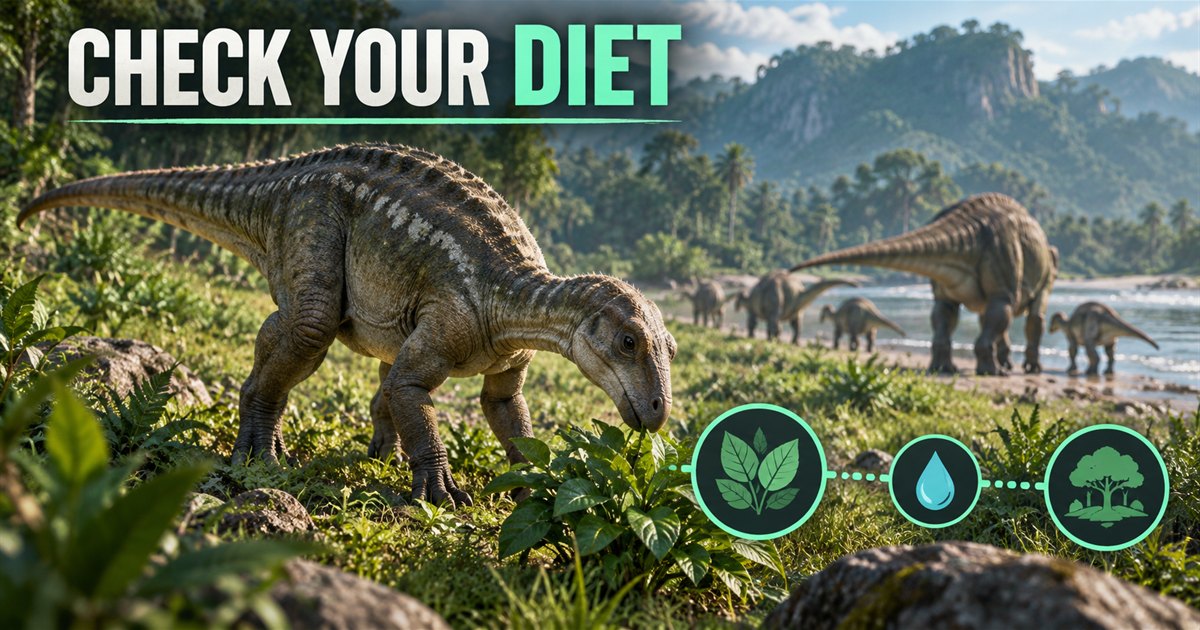
Open your current Status Report and check preferred foods and nutrients. Use that information to choose the next feeding stop. An old Tenontosaurus diet list should not override what the game currently displays for your animal.
Plan a short route that connects an appropriate food reference with water and a place to pause. A long detour for one nutrient may be a poor choice when thirst or condition already needs attention. Reassess the trip as your needs change.
Inspect the actual plant and the space around it before feeding. A mapped resource is a reference location, not confirmation that the food is available right now or that nobody else is using the area. Keep watching the approach while eating.
Coordinate resource stops with friends. If one companion needs food and another needs water, agree which stop comes first and where to wait. Continuing silently can leave the group split just when someone needs help finding the others.
Our food and diet guide covers the wider nutrient system. Pair it with the water guide when choosing a bank, rather than assuming the closest water on a map has a straightforward approach.
Juvenile Tenonto survival: practise movement before combat
Start with a local route you can describe clearly. Learn the landmarks around a food reference and a water approach, then choose a familiar place to return. That gives you a practical plan when the group gets separated or the direct path becomes inconvenient.
Practise turning and stopping on ordinary ground before travelling across steep terrain. A top-down route can look simple while the playable slope is awkward. Judge the surface in the game and choose another approach when you cannot see a comfortable way through.
A young animal is not an adult with a smaller appearance. Do not copy adult combat confidence or plan growth around a permanent time estimate. Check your current life stage, condition and resource needs, and avoid unnecessary encounters while learning.
Ask the group to wait before a difficult section. Catching up alone can create extra pressure to sprint, take a shortcut or approach water without looking. Use a clear meeting point rather than following a disappearing silhouette through dense cover.
Tenontosaurus herd travel: regroup before crossing
Choose the next destination together. A landmark or meeting pin is clearer than saying to keep going north without checking everyone's needs. Before leaving, make sure the slowest or youngest member knows where you intend to stop.
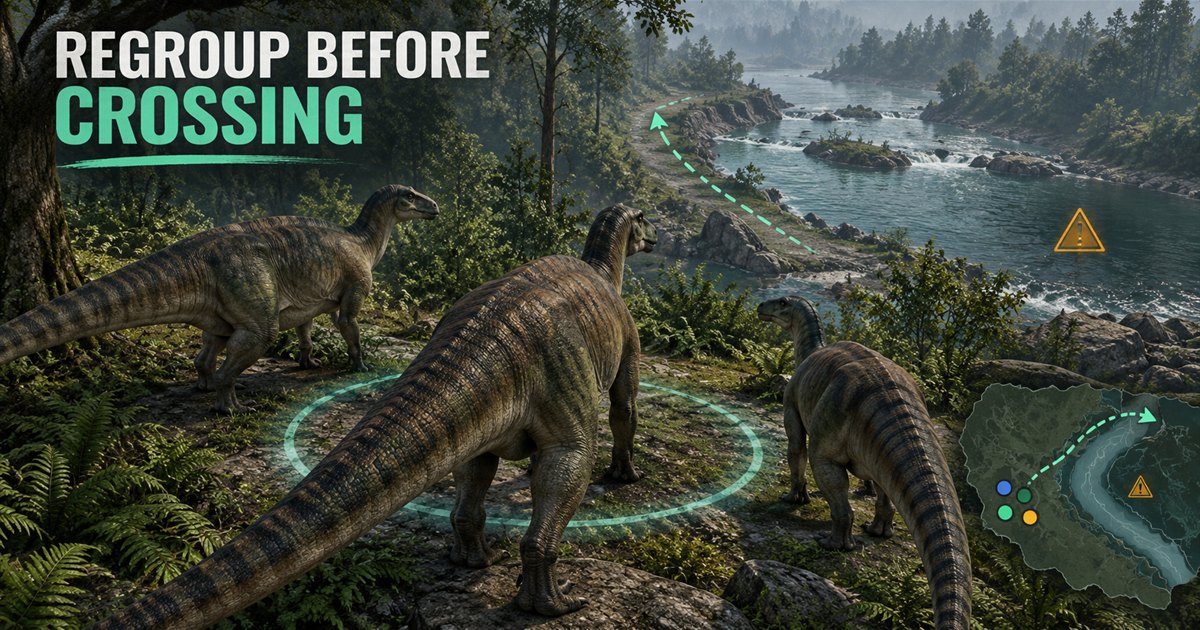
At water, inspect the bank, the opposite side and an alternative route. A surface that looks quiet does not prove submerged predators are absent. Do not start a crossing solely because a companion reached the other side once.
Pause and regroup before a river or major terrain change. If someone needs stamina recovery or a resource stop, decide that while you are still together on inspectable ground. Changing the plan is better than forcing a crossing because the group has already committed to a direction.
Keep your journey flexible. Weather, visibility, other players and your animal's condition can make the original destination less practical. The stamina guide helps with travel reserve, while our Gateway beginner map guide explains navigation references.
Gateway navigation and latest squad positions
TheIsleMinimap's map layers help relate your latest position to mapped landmarks and resources. Use the game to inspect slopes, vegetation and other animals; the map cannot confirm a safe crossing or an available plant for you.
Copy Asset Location to update your marker, or use the enabled screen reader with your confirmed area while Lat and Long are visible. It shows the latest accepted reading, not uninterrupted tracking while the panel is hidden. Read the coordinates and location guide for setup.
Private app squads support up to four players and shared latest positions. The app limit is not The Isle's in-game herd limit. Solo Lifetime provides local navigation; Squad plans include online squad features. See the current plans for available options.
Tenontosaurus questions: kick, tail slam and diet
How do you rear kick as Tenonto?
The community default-input reference uses RMB. Compare it with your current secondary-attack binding and practise the action separately before adding an alternate input.
How do you use Tenontosaurus tail slam?
The community reference uses Alt + RMB for the directional tail action. Check your current controls; it is distinct from the ordinary rear kick.
Does Tenonto always stun another dinosaur?
This guide makes no guaranteed stun or matchup claim. Judge your current animal, target, positioning and game feedback rather than relying on an old damage table.
What should Tenontosaurus eat?
Check preferred foods and nutrients in your current Status Report, then plan a manageable feeding trip with water and a regroup point in mind.