
Playing Troodon in The Isle EVRIMA? Learn the pounce input, then learn when to wait. A coordinated opening can be more useful than another rushed attack, especially when your next landing would put you beside a much larger animal.
This guide covers Troodon controls, venom timing, night hunting, diet and juvenile survival on Gateway. Your current game bindings, Status Report and server rules take priority. The four AI-generated illustrations are conceptual teaching scenes, not official screenshots, exact attack animations, venom visual effects or accurate Gateway geography.
Troodon controls: bite, directional attack and venom pounce
The community Troodon reference lists the default inputs below. It also carries an outdated-information notice, so confirm your bindings and practise in your current build.
| Default input | Reference action | Practice goal |
|---|---|---|
| LMB | Bite | Recognise the ordinary attack separately from a leap. |
| Hold RMB | Pounce / venomous leaping attack | Learn the approach, attachment and how to leave the target. |
| Alt + LMB | Directional bite with a lunge | Observe the movement before using it near an obstacle. |
Begin on clear ground. Test one action at a time and make sure you understand what happens after the input, including how you regain control and where you can move next. A crowded food site or riverbank is a poor place to discover an unfamiliar movement.
Do not assume that every raptor uses the same latched controls. The official patch 0.16.189 notes specifically described Omniraptor manual latched actions and also changed Troodon envenomation visuals. Treat old footage and another species' button list as references to check, rather than instructions to copy automatically.
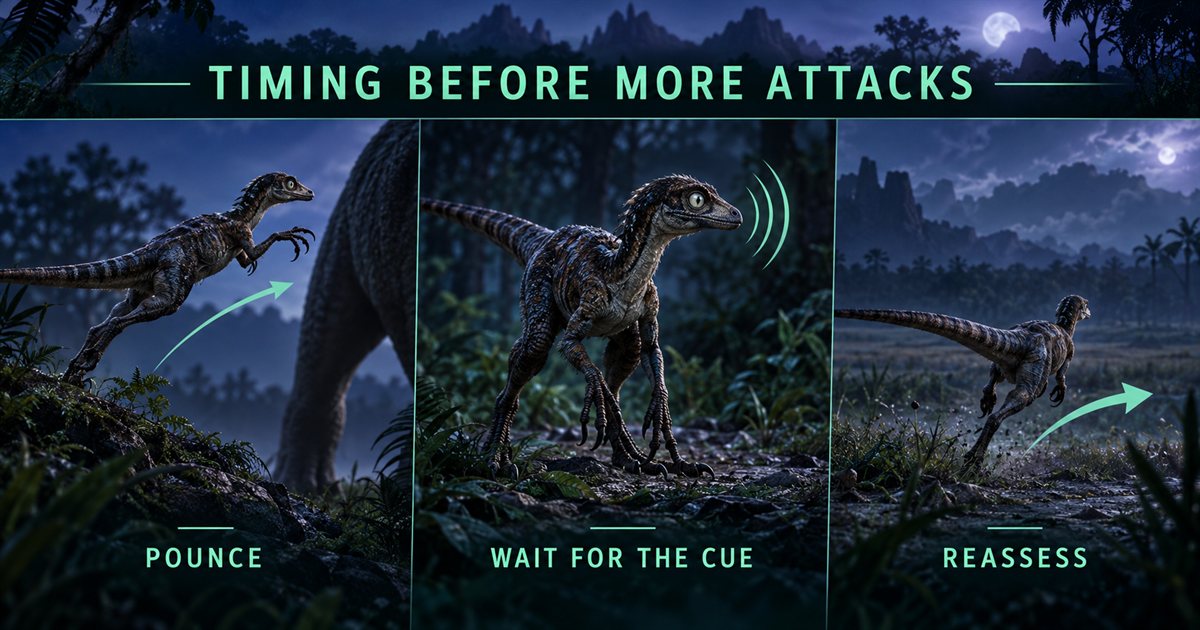
How Troodon venom works: timing before more attacks
The published references describe a staged envenomation process. The community guide describes three stages and vocal cues between applications, with a stronger cue at completion. Watch and listen in the current build; do not replace the cue with a countdown memorised from an old video.
The official February 2023 development notes explained the design around coordinated pounces and warned that attacking too early could reset progress. Those notes are historical design context, not a current damage or duration table.
- Agree who takes the opening. Make sure teammates know which animal is being watched.
- Make one deliberate application. Avoid everyone committing simply because the first player moved.
- Listen and reassess. Wait for the relevant cue while checking the target, terrain and your own condition.
- Choose the next action together. Continue only if the opening still makes sense; otherwise leave and regroup.
For example, if the first attacker lands but the target turns toward your waiting position, the planned follow-up may no longer be sensible. A cue tells you something about the sequence. It does not remove the risk of standing where the target can reach you.
This guide does not promise a particular damage multiplier, poison timer or guaranteed kill after a fixed number of hits. Balance, contact and your current animal matter. If a visual effect looks different from an older tutorial, use the live encounter and current references instead of assuming the system failed.
Troodon night hunting: read the ground as well as the target
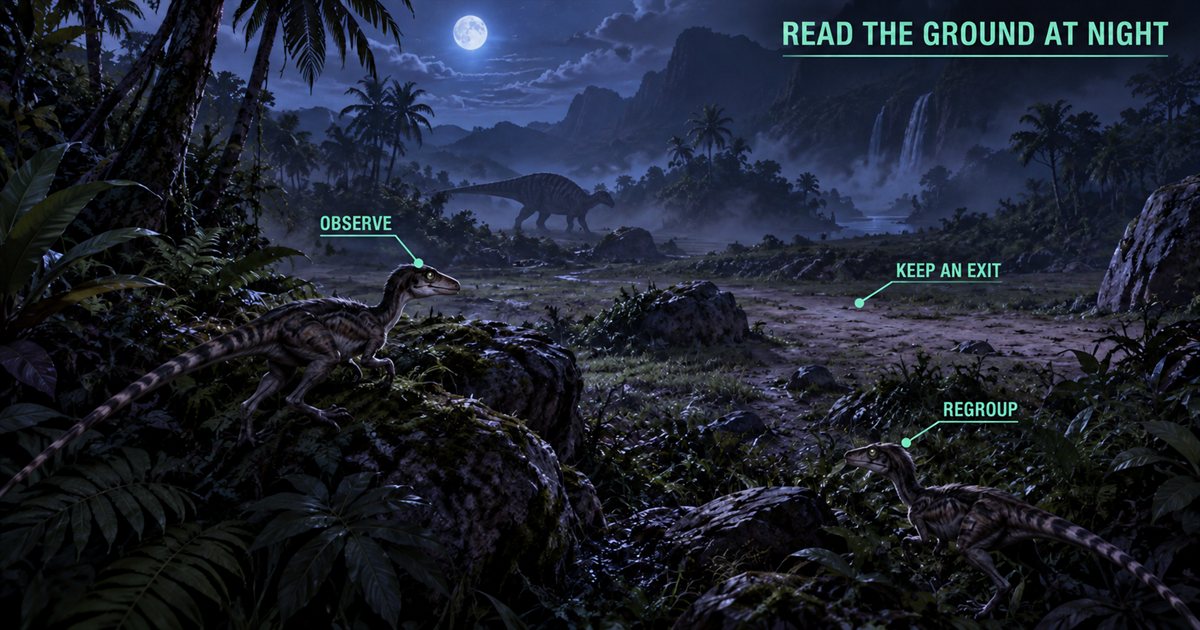
Darkness can make an approach harder to judge for everyone involved. Before closing distance, identify a landmark, an open departure direction and any drop or water edge you would rather avoid. Knowing what is behind you matters when a target suddenly changes direction.
Observe before committing. Is the animal alone, or did another silhouette disappear behind it? Is it feeding, travelling or already reacting to something you cannot see? A short pause can reveal that the apparent opportunity is part of a busier encounter.
Keep a regrouping point separate from the attack location. “Meet beside the rock after leaving” is easier to act on than “follow me,” especially when different players lose sight of the target at different moments. Change that point if another animal arrives or the terrain becomes crowded.
Do not treat night vision as proof that an approach is safe. Our night vision guide covers visibility and practical setup. If you cannot read the ground ahead, slowing down or changing the approach is more useful than guessing where the next landing will be.
Choosing targets and coordinating a Troodon group
Choose an encounter you can understand. A larger animal being visible does not make it a useful target, and a group having several attackers does not guarantee that everyone can reach the same opening. Look at the space around the target and the options available after a missed approach.
Use short, specific communication: which animal, which side, who acts next and where everyone leaves. If the target moves behind an obstacle, update the plan rather than continuing a sequence designed for the previous position.
Solo play needs a different risk budget. Without another player watching the surroundings, every chase also competes with your ability to notice a new threat. Feeding, avoiding an uncertain fight or moving to a clearer area can be a better decision than trying to recreate a coordinated group's combat clip.
For a comparison of pounce decision-making, see the Omniraptor guide. The species and their controls differ, but choosing an approach and a departure point remains a useful habit.
Stamina, dismounting and deciding when to stop
Check your reserve before closing distance. Think about the full attempt: approach, attack, departure and the distance to cover afterwards. Using everything to reach a target leaves fewer choices when the target reacts.
During practice, learn how your current dismount works and where it puts you. Plan the ground you want to reach after leaving the target. A landing beside another animal or in an awkward gap can be more important than whether the original attack connected.
Set a reason to stop before starting. Examples include losing sight of a teammate, a second threat joining, an uncertain landing area or insufficient resources for a longer pursuit. Follow that reason when it happens; another possible hit is not automatically worth extending the encounter.
Read the stamina guide for travel and resting decisions, and the injury and recovery guide if your condition changes.
Troodon food and diet: plan from your current Status Report
Open the Status Report before deciding what to look for. Compare hunger with the nutrient you actually need. Filling the stomach and improving diet are different planning questions, so check the result after feeding rather than assuming the nearest food solves both.
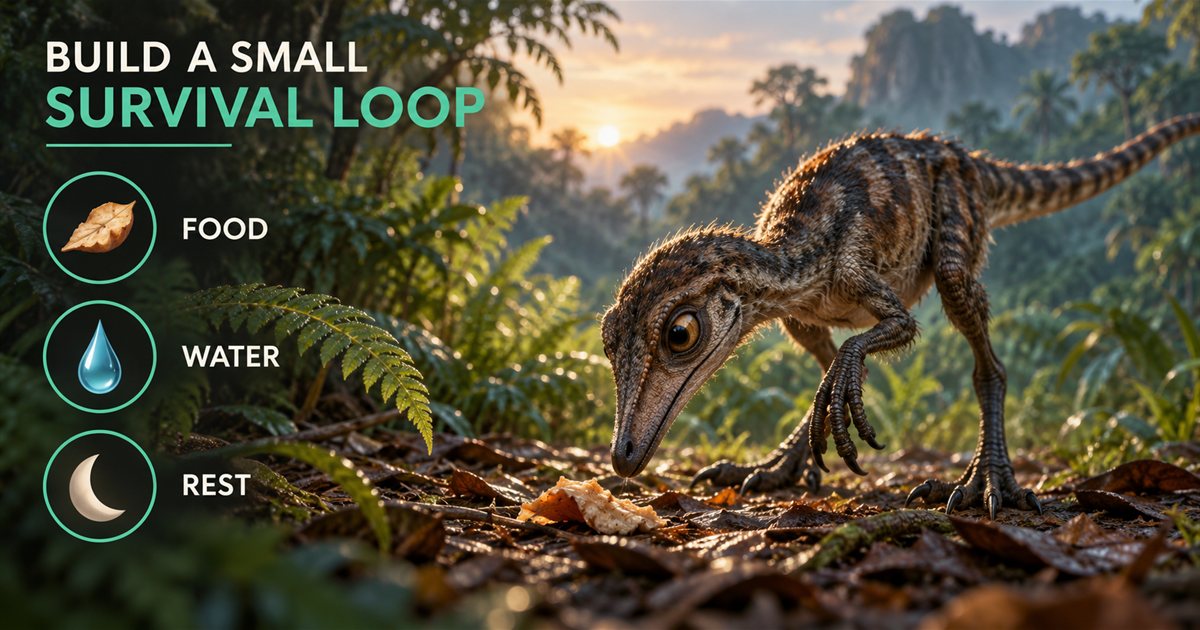
Build a small routine around a plausible food search, a water approach and a place to recover. If the food search fails, choose a fallback while you still have enough resources to reach it. Repeatedly circling an empty area can turn a manageable shortage into an urgent one.
When investigating a carcass, look beyond the food itself. Another player may be returning to it, and the approach may expose you before you can see the surrounding ground. Leave when the situation changes rather than treating a discovered meal as a permanent safe base.
Our food and diet guide, scent guide and AI food search guide explain the broader tools. Map references can suggest somewhere to investigate; they cannot promise live prey, an available carcass or the nutrient outcome of your next meal.
Growing a juvenile Troodon without borrowing an adult's plan
The community reference identifies venom availability with the sub-adult stage. Do not assume a newly spawned Troodon has every option shown in adult hunting footage; verify what your current animal can do before relying on it.
Start with a journey you can complete and recognise on the return. One nearby food search and a deliberate water approach give you a clearer picture of your resources than a long sprint toward friends whose location keeps changing.
Before a rendezvous, ask whether the least prepared player can comfortably reach it. Sometimes the better meeting plan is for established companions to move closer, rather than asking a juvenile to cross unfamiliar terrain immediately.
Use our growth guide and prime, elder and entombing guide for progression. This guide avoids fixed growth promises because your current condition and the active game build matter.
Common Troodon mistakes
- Everyone attacking at once: agree on the sequence and listen before committing again.
- Chasing a cue without checking the target: reassess the animal's position and the ground ahead.
- Borrowing another raptor's controls: practise Troodon inputs and dismount behaviour separately.
- Spending the whole reserve on the approach: leave enough options for departure and recovery.
- Meeting at a moving location: choose a clear stopping point and refresh positions when someone gets separated.
Using TheIsleMinimap for Troodon travel and regrouping
Use map layers to compare location names, water and relevant resource references with your current marker. Check the actual terrain before travelling. Our water guide covers deliberate approaches, while the zone guide explains the different map references.
Copy Asset Location in-game, or use the enabled screen reader with an approved reading area while Lat and Long are visible. Your marker represents the latest accepted coordinate reading. It does not continue tracking movement when coordinates are hidden; see the coordinate guide.
Squad plans support private app squads for up to four players; Solo Lifetime provides the solo option. App squads are separate from in-game group limits and server rules. Shared accepted positions can help you meet again after leaving an encounter.
Troodon questions
How do you pounce as Troodon?
The community reference lists holding RMB. Confirm your current bindings and practise attachment and departure before using the input in an encounter.
Why should a Troodon group wait between pounces?
The published design relies on a timed sequence. Coordinate around the cues you observe rather than everyone applying the next attack immediately.
Does venom guarantee a kill?
No guide can promise that. The target, successful contact, your own condition and the changing encounter still matter.
What should Troodon eat?
Check the preferred foods and nutrient bars in your current Status Report, then choose a search and fallback that fit your hunger, thirst and available travel reserve.
Can the minimap tell the group when to pounce?
No. It provides navigation references and supported position sharing. Venom cues and combat decisions remain in the game.